PLEASE NOTE: Due to global tariffs, prices may fluctuate. To better serve you, we reserve the right to add a surcharge to orders.

Vacuum Pumps

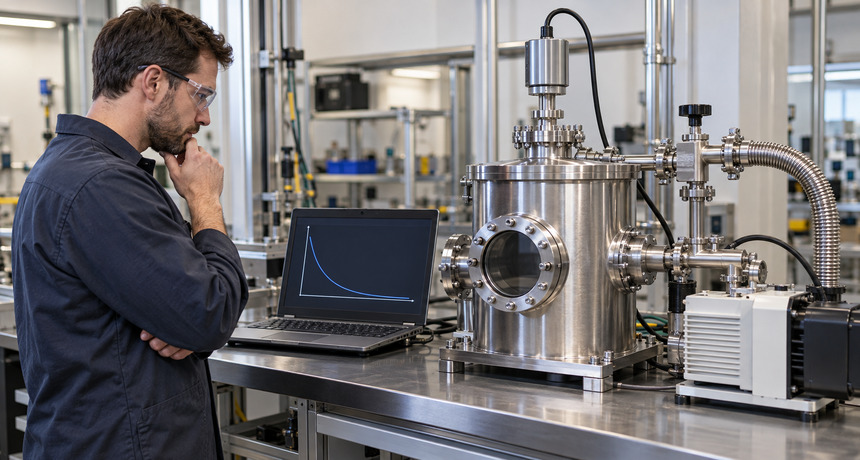
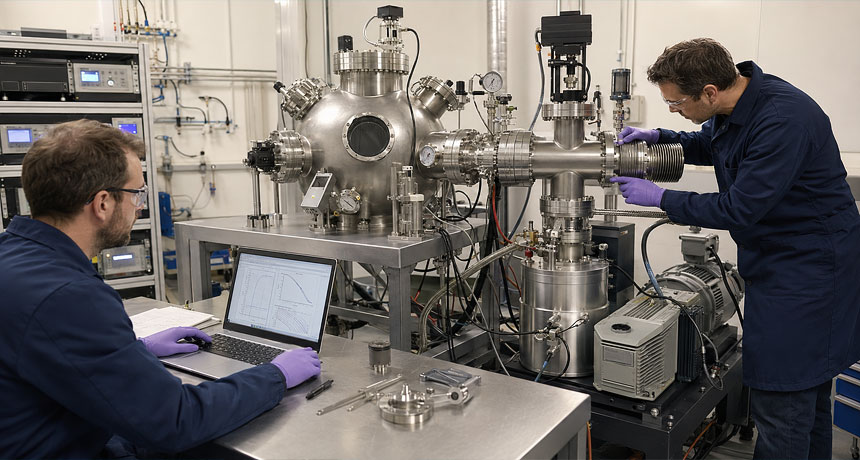
Properly Sizing a Vacuum System for Your Application

Properly sizing a vacuum system involves more than selecting a pump with enough pumping speed. The pump, chamber, plumbing, valves, gauges, gas load, process conditions, and required cycle time all work together. A pump that looks perfect on a datasheet may perform very differently once it is connected to a real chamber through several feet of tubing, elbows, valves, and fittings.
Read more...

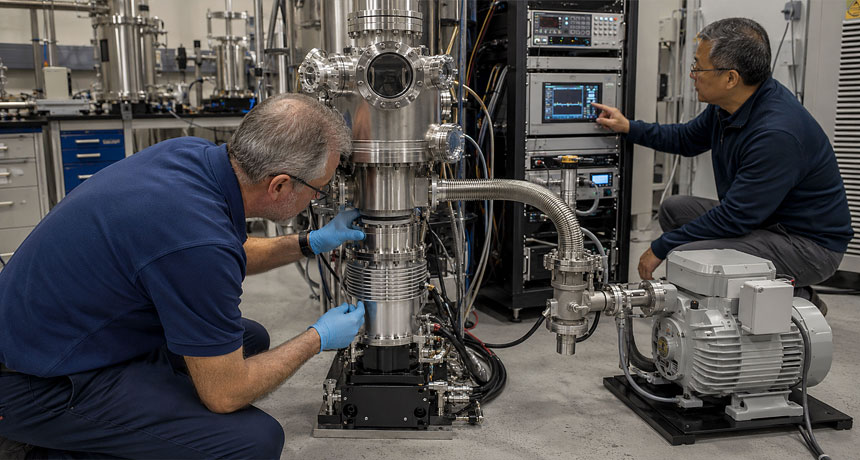
Understanding Molecular Drag Pumps and Their Applications

Molecular drag pumps occupy an interesting place in vacuum technology. The basic principle dates back more than a century, yet it remains highly relevant in modern high-vacuum equipment. In fact, many users benefit from molecular drag pumping without realizing it because the technology is frequently integrated into compound turbomolecular pumps rather than used as a completely separate pump.
Read more...

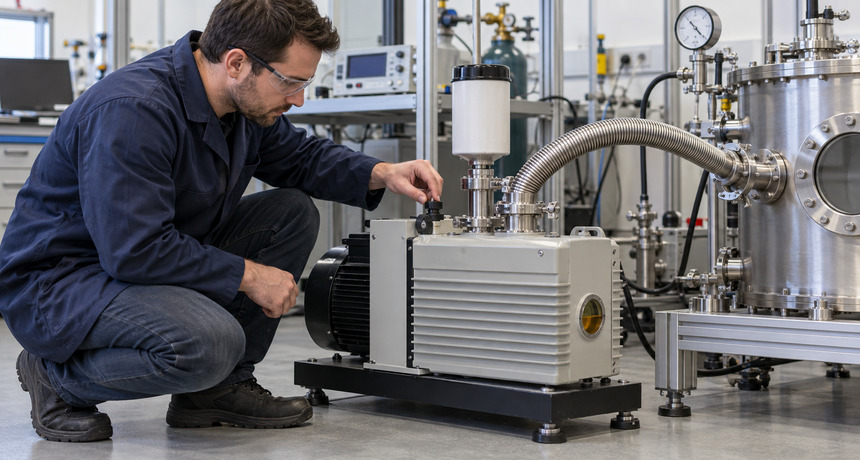
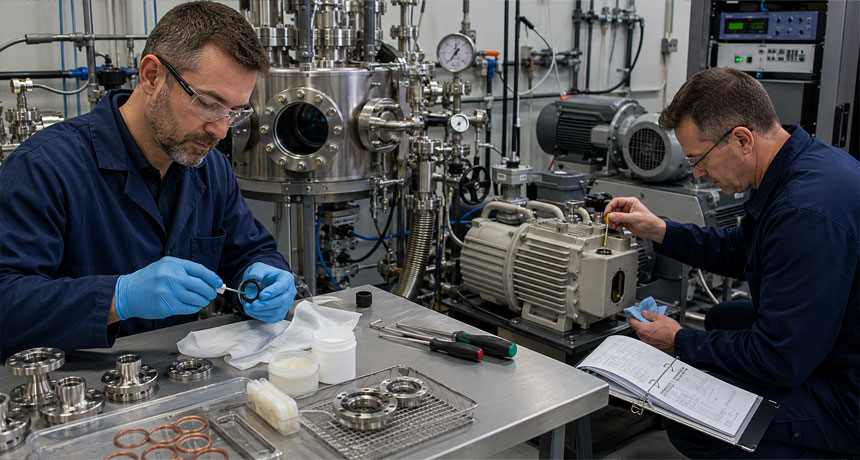
Proper Lubrication Techniques for Vacuum Components

Lubrication can improve the operation and service life of certain vacuum components, but it must be approached differently than lubrication in ordinary mechanical equipment. In a vacuum environment, excess grease or the wrong oil does more than create a mess. It can add gas load, migrate through the system, collect particles, contaminate sensitive surfaces, damage elastomers, or prevent the chamber from reaching its target pressure.
Read more...

The Impact of Magnetic Levitation on Turbo Pump Performance

Turbomolecular pumps are built around speed, precision, and careful mechanical control. A rotor spinning at tens of thousands of revolutions per minute has to move gas molecules efficiently while staying stable, balanced, and protected from contact damage. In that environment, bearing design is not a minor detail. It directly affects vibration, service life, cleanliness, reliability, and how well the pump performs in demanding high-vacuum applications.
Read more...

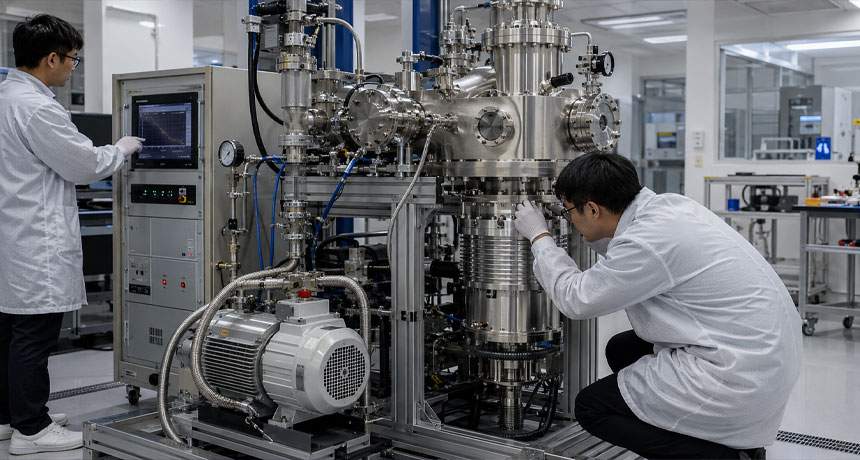
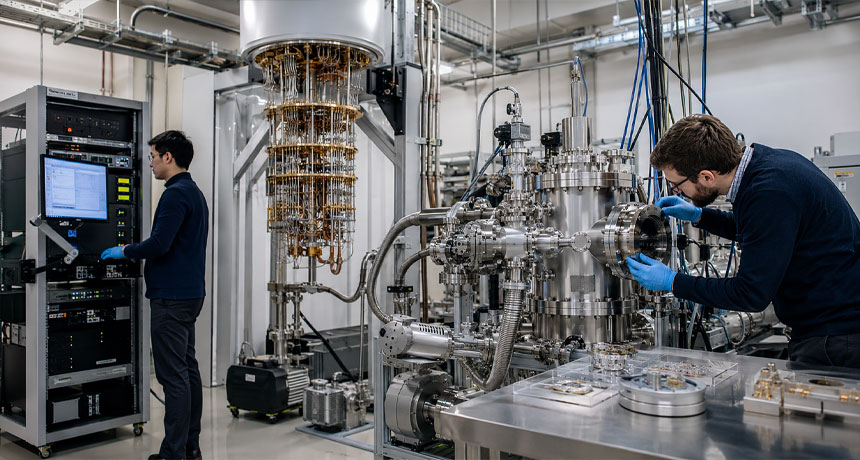
How Vacuum Technology Supports Quantum Computing Development

Quantum computing is often discussed in terms of qubits, error correction, cryogenics, and exotic materials. Those subjects deserve the attention, but they can make it easy to overlook the support systems that allow quantum devices to be fabricated, tested, and operated in the first place. Vacuum technology is one of those support systems. It is not a side detail. It is part of the foundation that makes many quantum computing platforms possible.
Read more...

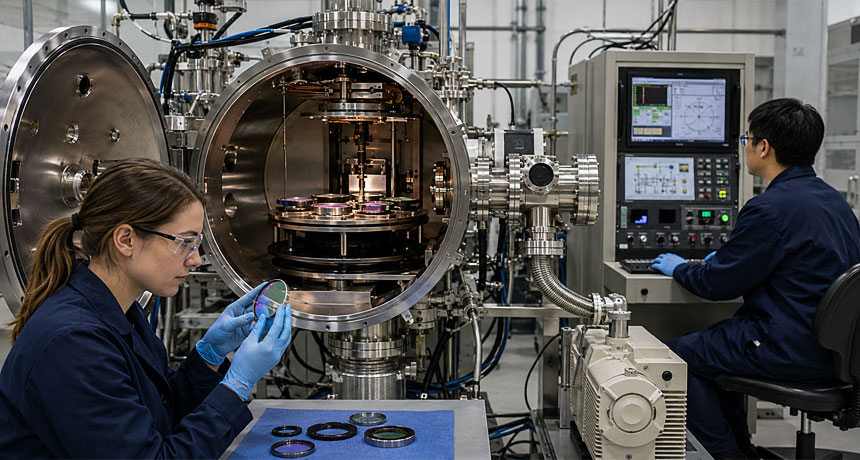
The Science of Optical Coatings in Vacuum Deposition

Optical coatings look simple from the outside. A lens, mirror, filter, or window may appear to have only a faint tint or reflective surface. But the performance of that surface often depends on a carefully engineered stack of thin films, each deposited with controlled thickness, composition, density, and optical behavior. In demanding applications, the coating is not decoration. It determines how the optic reflects, transmits, absorbs, filters, or protects light.
Read more...

The Role of Backstreaming in Vacuum Contamination

In vacuum work, contamination problems are often blamed on the obvious suspects: leaks, dirty parts, bad materials, or poor cleaning. Those are all real causes. But one contamination source is easy to underestimate because it can come from inside an otherwise functional pumping system: backstreaming.
Read more...

The Use of Vacuum in High-Energy Physics Research

High-energy physics research depends on vacuum for a simple reason: particle beams do not behave well in air. Whether the work involves a large accelerator, an experimental beamline, a detector test stand, or an instrument-development lab, the goal is the same. Researchers need a controlled environment where charged particles can travel long distances, collide where intended, and be measured without unnecessary interference.
Read more...

Can a Vacuum Pump Be Too Powerful for an Application?

A vacuum pump can absolutely be “too powerful”—not because it pulls too much vacuum (vacuum is bounded by physics and leaks), but because it can pull too much pumping speed and throughput for the system’s conductance, process behavior, and control needs. Oversizing often wastes money, increases operational risk, and can actually make results less stable. The goal is not “the biggest pump,” but the right effective pumping speed at the chamber—and the right level of control over pressure, gas load,...
Read more...

Comparing Oil-Sealed vs Oil-Free Vacuum Pumps

Choosing between an oil-sealed (wet) pump and an oil-free (dry) pump is one of the most consequential decisions in a vacuum system design. It affects everything downstream—base pressure stability, contamination risk, maintenance workload, uptime, and even how forgiving the system is to water vapor and process byproducts. The “right” answer depends on how clean your process must be, how much vapor you expect, what pressure range you need, and what kind of lifecycle cost you can tolerate. This article breaks...
Read more...

"*" indicates required fields

This field is for validation purposes and should be left unchanged.
I would like to request a quote for the following product:
This field is hidden when viewing the form
Anything else we need to know? Make, model, or other details.
Name*
Shipping Address*
A shipping address is required to receive a quote so we can more easily provide you with the best price possible.