PLEASE NOTE: Due to global tariffs, prices may fluctuate. To better serve you, we reserve the right to add a surcharge to orders.

Hardware

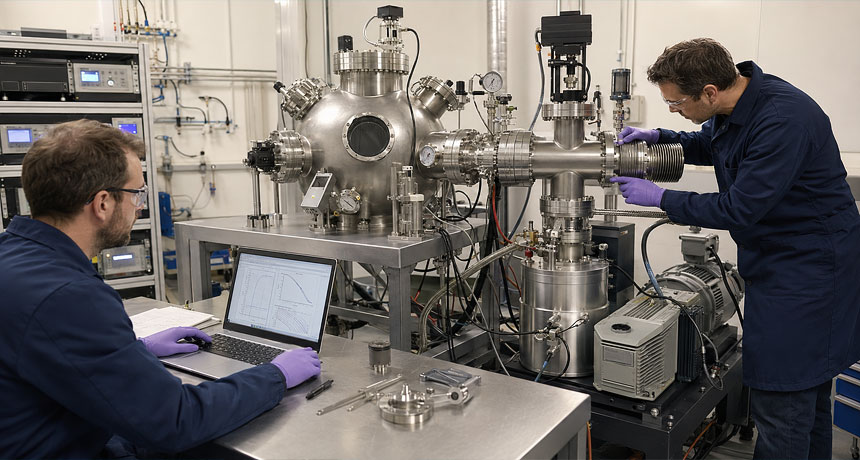
The Impact of Magnetic Levitation on Turbo Pump Performance

Turbomolecular pumps are built around speed, precision, and careful mechanical control. A rotor spinning at tens of thousands of revolutions per minute has to move gas molecules efficiently while staying stable, balanced, and protected from contact damage. In that environment, bearing design is not a minor detail. It directly affects vibration, service life, cleanliness, reliability, and how well the pump performs in demanding high-vacuum applications.
Read more...

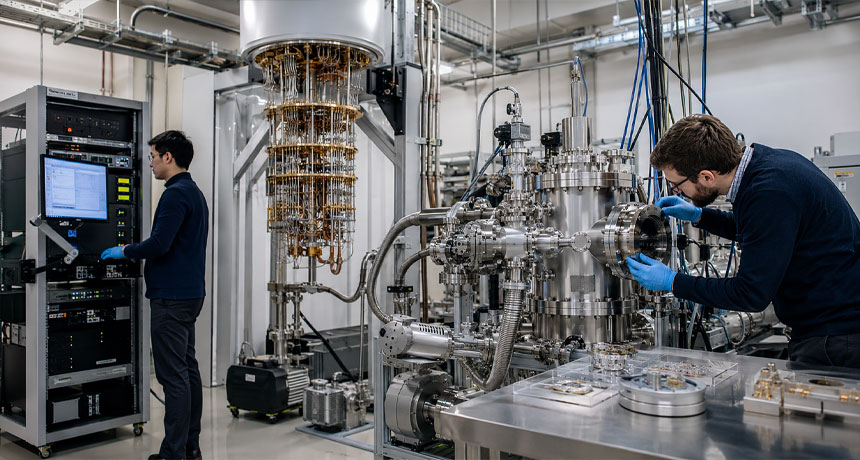
How Vacuum Technology Supports Quantum Computing Development

Quantum computing is often discussed in terms of qubits, error correction, cryogenics, and exotic materials. Those subjects deserve the attention, but they can make it easy to overlook the support systems that allow quantum devices to be fabricated, tested, and operated in the first place. Vacuum technology is one of those support systems. It is not a side detail. It is part of the foundation that makes many quantum computing platforms possible.
Read more...

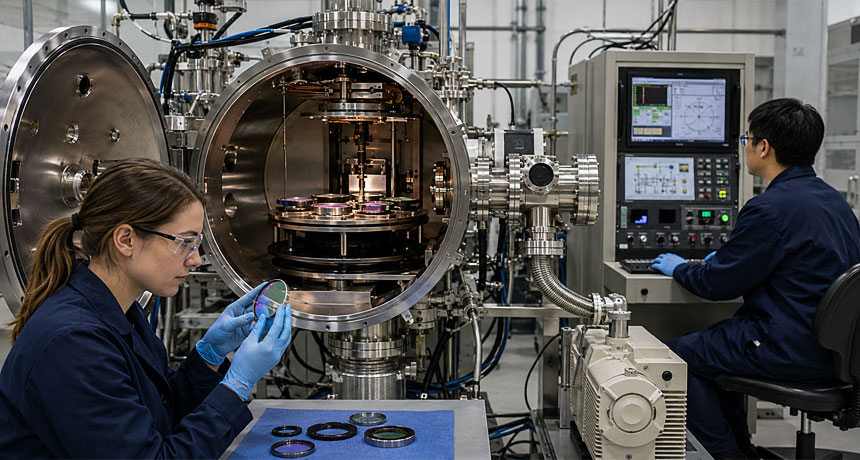
The Science of Optical Coatings in Vacuum Deposition

Optical coatings look simple from the outside. A lens, mirror, filter, or window may appear to have only a faint tint or reflective surface. But the performance of that surface often depends on a carefully engineered stack of thin films, each deposited with controlled thickness, composition, density, and optical behavior. In demanding applications, the coating is not decoration. It determines how the optic reflects, transmits, absorbs, filters, or protects light.
Read more...

How Cold Cathode Gauges Work in High Vacuum Applications

Cold cathode gauges are widely used in high vacuum applications because they provide durable, filament-free pressure measurement in ranges where mechanical and thermal-conductivity gauges are no longer effective. They are common in vacuum chambers, coating systems, research equipment, analytical instruments, semiconductor support systems, and other applications where users need to know what is happening well below rough vacuum.
Read more...

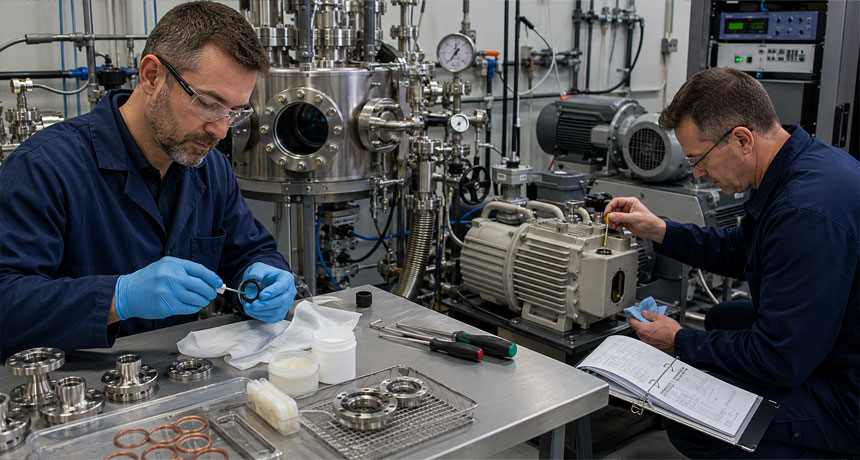
The Most Common Sources of Vacuum Leaks

Vacuum leaks are one of the most common and frustrating problems in vacuum-system work. A system may have the right pump, clean hardware, and a sensible layout, but a small leak can still keep it from reaching base pressure, slow the pump-down curve, or create unstable readings during operation. In some cases, the leak is obvious. In others, the system behaves poorly even though every connection looks fine from the outside.
Read more...

Why Calibration Matters for Vacuum Sensors

Vacuum sensors are often treated like small accessories in a larger vacuum system, but they have an outsized influence on how that system is operated. A pump may be healthy, a chamber may be clean, and the plumbing may be leak-tight, but if the sensor is drifting or reading outside its useful range, the operator can still make the wrong decision. In vacuum work, pressure readings are not just numbers on a display. They guide pump-down decisions, process timing, leak...
Read more...

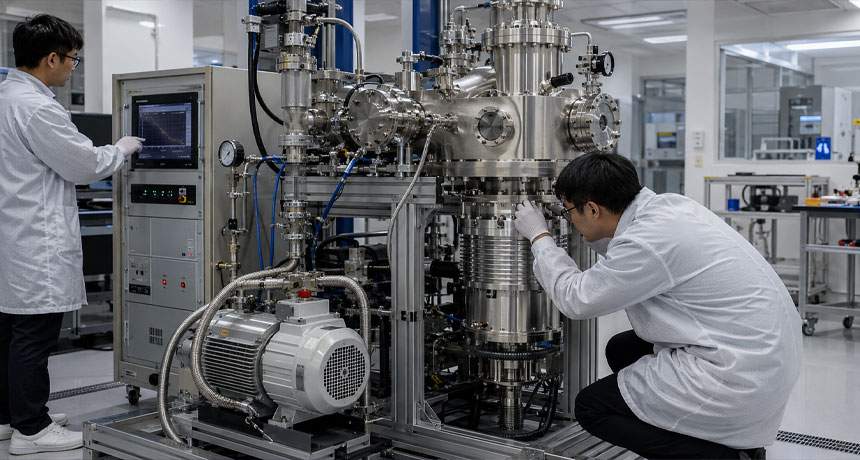
Why Stainless Steel is the Gold Standard for Vacuum Chambers

In vacuum engineering, material choice is never a cosmetic decision. The chamber wall is part of the vacuum system itself: it influences outgassing, leak integrity, chemical compatibility, mechanical stability, cleaning, and long-term reliability. While aluminum, glass, and specialty alloys all have their place, stainless steel has earned its reputation as the gold standard for vacuum chambers because it delivers the best all-around balance of cleanliness, strength, fabricability, and compatibility across a wide range of vacuum regimes.
Read more...

How to Design a Leak-Free Vacuum System

“Leak-free” in vacuum engineering usually means two things: (1) no real leaks to atmosphere (or between isolated volumes), and (2) no hidden gas sources inside the system that behave like leaks (virtual leaks, permeation, outgassing, backstreaming, and trapped volumes). Most vacuum “leak problems” are actually a mix of design choices, assembly practice, and material behavior—so the best time to solve them is at the design stage, not after the system is built. This guide walks through a practical, engineering-first approach...
Read more...

Choosing the Right Materials for High-Temperature Vacuum Applications

High-temperature vacuum work is unforgiving because it stacks multiple failure modes on top of each other. Elevated heat drives outgassing, accelerates diffusion and reactions, and magnifies any mismatch in thermal expansion. Meanwhile, vacuum removes convective cooling and eliminates the “forgiveness” of atmospheric contamination—so a material that behaves perfectly well in air can become a major source of background gas, particulates, or seal failure in a hot vacuum environment. Choosing materials thoughtfully up front is one of the most cost-effective ways...
Read more...

How Superconducting Materials Are Affecting Vacuum Applications

Superconductors used to belong mostly to the realm of fundamental physics. Today, they’re at the heart of real-world systems: particle accelerators, MRI and NMR machines, fusion prototypes, high-field magnets, and rapidly growing quantum computing platforms. As these technologies move from one-off experiments to complex facilities and commercial products, they bring new expectations and challenges for vacuum systems.
Read more...

"*" indicates required fields

This field is for validation purposes and should be left unchanged.
I would like to request a quote for the following product:
This field is hidden when viewing the form
Anything else we need to know? Make, model, or other details.
Name*
Shipping Address*
A shipping address is required to receive a quote so we can more easily provide you with the best price possible.