


PLEASE NOTE: Due to global tariffs, prices may fluctuate. To better serve you, we reserve the right to add a surcharge to orders.

Leak Detectors

How Vacuum Technology Supports Quantum Computing Development

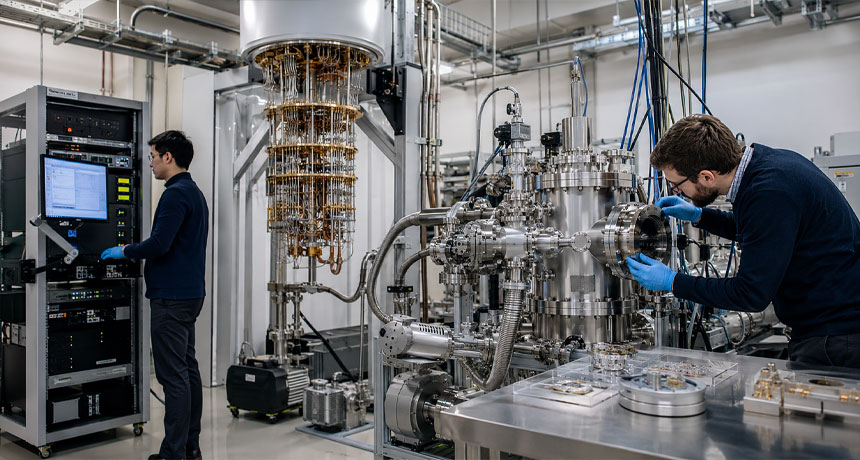
Quantum computing is often discussed in terms of qubits, error correction, cryogenics, and exotic materials. Those subjects deserve the attention, but they can make it easy to overlook the support systems that allow quantum devices to be fabricated, tested, and operated in the first place. Vacuum technology is one of those support systems. It is not a side detail. It is part of the foundation that makes many quantum computing platforms possible.
Read more...

The Most Common Sources of Vacuum Leaks

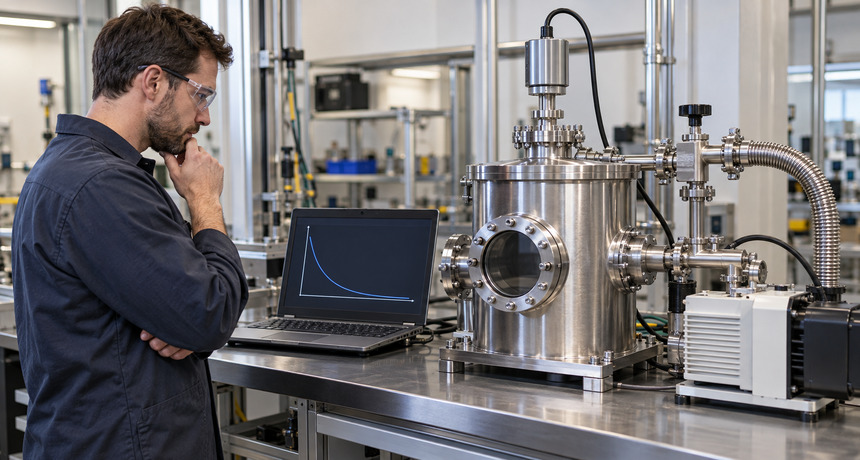
Vacuum leaks are one of the most common and frustrating problems in vacuum-system work. A system may have the right pump, clean hardware, and a sensible layout, but a small leak can still keep it from reaching base pressure, slow the pump-down curve, or create unstable readings during operation. In some cases, the leak is obvious. In others, the system behaves poorly even though every connection looks fine from the outside.
Read more...

How to Design a Leak-Free Vacuum System

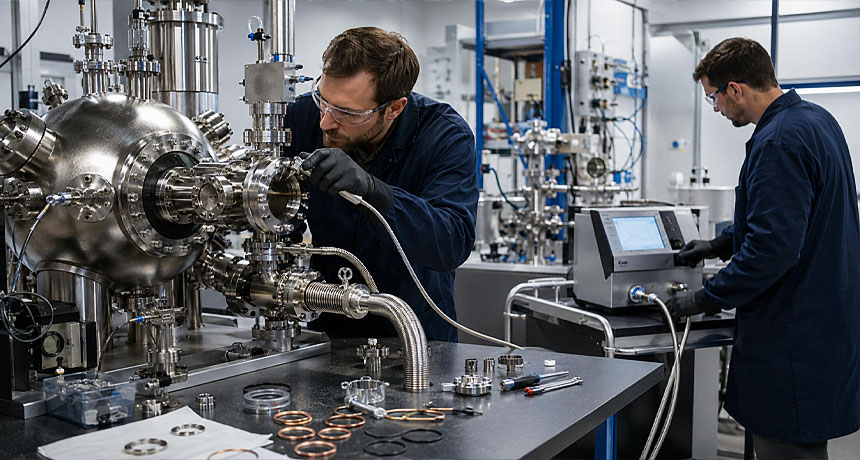
“Leak-free” in vacuum engineering usually means two things: (1) no real leaks to atmosphere (or between isolated volumes), and (2) no hidden gas sources inside the system that behave like leaks (virtual leaks, permeation, outgassing, backstreaming, and trapped volumes). Most vacuum “leak problems” are actually a mix of design choices, assembly practice, and material behavior—so the best time to solve them is at the design stage, not after the system is built. This guide walks through a practical, engineering-first approach...
Read more...

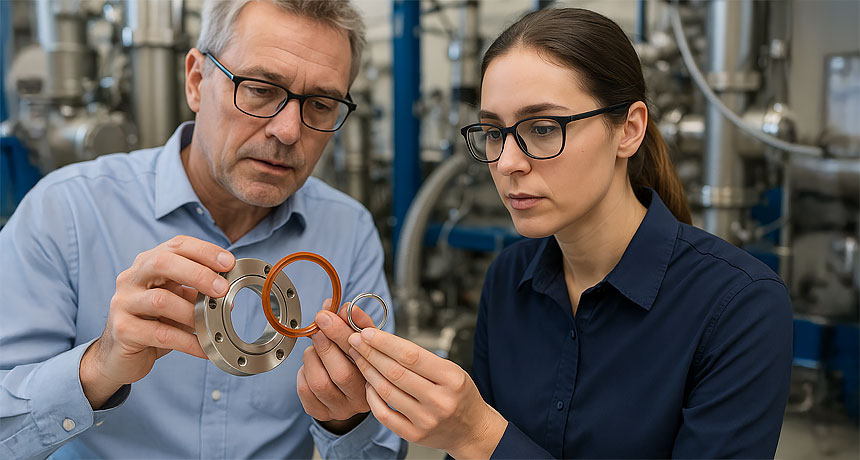
Comparing Ceramic vs Metal Seals for High Vacuum Applications

In the demanding world of high vacuum and ultra-high vacuum (UHV) environments, choosing the right sealing material is critical. Whether you’re working in semiconductor fabrication, space simulation, surface analysis, or high-energy physics, the seals in your vacuum system help define the limits of your performance. Two of the most trusted materials for high vacuum sealing are ceramic and metal—each with distinct advantages, limitations, and ideal use cases. In this post, we’ll explore how ceramic and metal seals compare in terms...
Read more...

How to Select the Right Gauge for Measuring Ultra-High Vacuum

Achieving ultra-high vacuum (UHV)—defined as pressures below 10⁻⁷ mbar (or torr)—is a cornerstone of many advanced technologies, including semiconductor fabrication, surface science, particle physics, and aerospace research. But simply reaching these levels is only half the battle. Measuring them accurately is just as critical—and significantly more challenging. At such extreme vacuums, traditional gauges no longer function reliably. Choosing the right vacuum gauge for UHV conditions requires a clear understanding of gauge technologies, sensitivity ranges, materials, and system compatibility. In this...
Read more...

Best Practices for Installing and Using Vacuum Pressure Transducers

In the world of high and ultra-high vacuum applications, accurate pressure measurement is absolutely critical. Whether you are working in semiconductor fabrication, materials research, pharmaceutical production, or any other high-precision industry, the reliability of your vacuum system often hinges on the performance of your vacuum pressure transducers.
Read more...

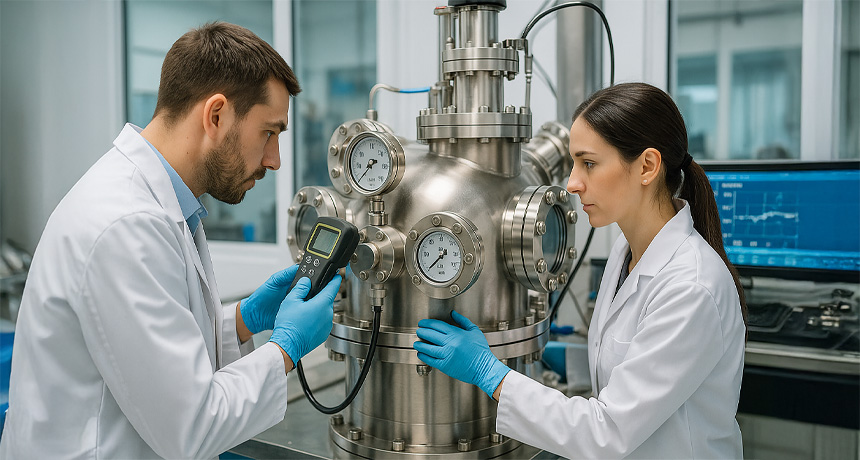
When to Use a Helium Leak Detector vs a Mass Spectrometer

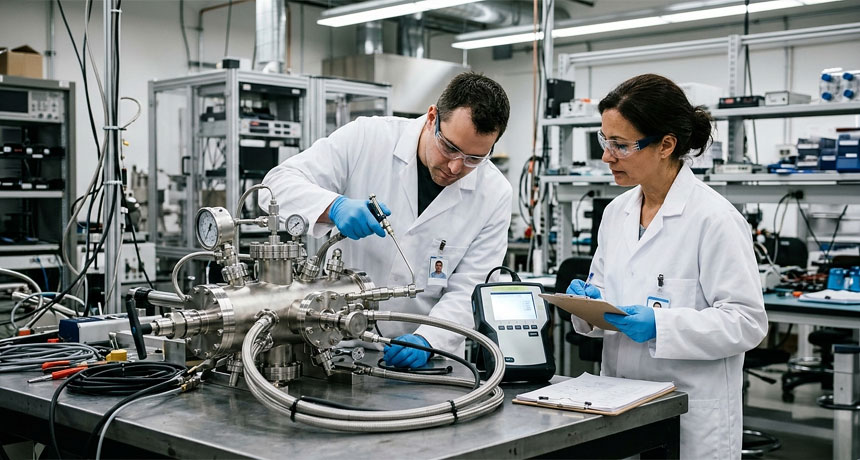
In the precise world of vacuum technology, leak detection is critical to ensuring system performance, maintaining safety, and preserving product integrity. Whether you're working with turbomolecular pumps in semiconductor manufacturing or high-vacuum chambers in laboratory research, the smallest leak can lead to significant consequences. Two of the most common methods for leak detection — helium leak detectors and mass spectrometers — each offer unique advantages depending on your application.
Read more...

How to Calibrate a Vacuum Gauge for Accurate Readings

In the realm of industrial and laboratory applications, particularly those involving turbomolecular vacuum pumps, the accuracy of vacuum measurements is paramount. Precise readings ensure optimal performance, maintain safety standards, and uphold the integrity of experimental results. Regular calibration of vacuum gauges is essential to achieve and maintain this accuracy. This comprehensive guide will walk you through the importance of calibration, the methods available, and a step-by-step procedure to calibrate your vacuum gauge effectively.​
Read more...

Should You Rent Or Buy A Helium Leak Detector? A Comprehensive Analysis

In the intricate world of vacuum technology and leak detection, professionals frequently face a crucial decision: rent or buy a helium leak detector? This seemingly straightforward question can have significant ramifications for your workflow, budget, and long-term goals. At High Vac Depot, we understand the weight of such a choice, especially when it comes to a vital tool like a helium leak detector.
Read more...

Vacuum Solutions For Your Analytical Instruments

Water vapor can be a challenging adversary in the world of vacuum technology. Whether you’re working with high vacuum systems for research, industrial applications, or even semiconductor manufacturing, the presence of water vapor can significantly impact the performance and reliability of your vacuum pumps.
Read more...

"*" indicates required fields

This field is for validation purposes and should be left unchanged.
I would like to request a quote for the following product:
This field is hidden when viewing the form
Anything else we need to know? Make, model, or other details.
Name*
Shipping Address*
A shipping address is required to receive a quote so we can more easily provide you with the best price possible.