


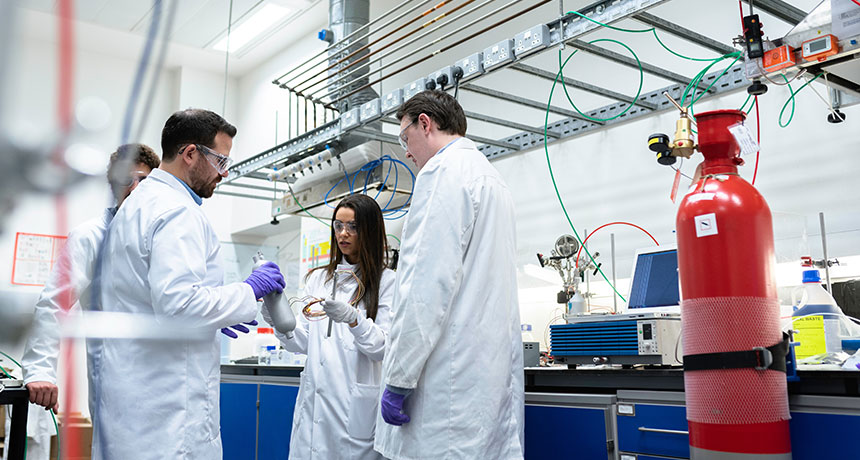
Why Leak Checking Is A Must
Leak Checking
Growth and development of many industries has led to specialization. In the scientific world, testing is essential for personnel safety, equipment integrity and product quality. An often-overlooked procedure in factories and laboratories is checking and detecting leaks. Small leaks can be difficult to detect; however, when you have a leak, it will certainly affect your product, process, or personnel. The proper skilled labor and working equipment in any laboratory installation is an integral part of the operation of any organization.
The working principle of a mass spectrometer leak detector (MSLD) is simple. The idea is to utilize an inert gas that is independent of your process, is safe, and is easily detectable. Most often helium is used and sprayed around your product or tool. The gas enter the leak site and is detected and measured by the leak detector. There are several MSLDs on the market from vendors like High Vac Depot. They are suited for determining large variations in the sizes of leaks. It is paramount to detect and correct leaks for several reasons.
To Warn of a Potential Failure
Operations and procedures carried out in laboratories rely on precision and accuracy. It is only through the accurate recording of data during a procedure or laboratory experiment that the validity of the results will remain intact. Any variation beyond the accepted margin of error will mean that the inference from the test or procedure will be faulty. General leaks in fluids and gases within the set-up of operation is more likely to interfere with the integrity of the entire process leading to failure due to incorrect inferences. Faults and errors can be fatal to the integrity and reputation of an organization. Therefore, checking for leaks using a leak detector before and during critical industrial or research processes are essential.
An appropriate and early detection of a leak within the equipment in an experimental set-up is guaranteed to warn the operators of a potential experimental or process failure. The proper corrective measures will then be made to maintain the integrity of the entire system and ensure the validity of the results obtained. Therefore, institutions that rely on the accuracy of their operations must dedicate a portion of their resources to employ the services of a professional to detect leaks and advise on the proper means to proceed. It is also advisable for these validation procedures to be performed regularly to ensure the continuous maintenance of the integrity of equipment and accuracy in results obtained.
To Reduce Waste
Samples and reagents used in complex laboratory procedures in research are costly. Therefore, their conservative use is critical in the profitable operation of an organization. However, leaks present a big problem to the institution in terms of the loss of raw materials incurred and overall expenses in running the organization. It should be noted that the leaks could be small but their impact to process or product integrity cannot be overstated. Leaks result in the loss of raw material and wastage of resources likely to be realized will be tremendous and subsequently, costly to the organization.
Detecting leaks early enough is the safest and surest control measure to put in place. Failing to carry out leak detection tests in time can give the impression of fast progress, whereas the reality is different. The resultant operational costs of industry will also be high if resources are wasted and no attempts are made to remedy possible resource wastage. For this reason, organizations must include policies in their standard operating procedures to detect any leak of raw materials or finished products during production.
To Protect Lives
The employees, students, researchers and all additional personnel within a working laboratory or industrial environment must be protected. The organization has a responsibility to protect the lives and interests of its employees, contractors or visitors within the boundaries of its premises. Gas leaks or the leak of any other flammable, corrosive, or poisonous substances pose a significant danger to the lives of everyone within the vicinity of their operations. Toxic gases can cause extensive harm to operators and other personnel within the facility. Some reagents are proven carcinogens, and direct exposure will likely precipitate cancer. Having the interests of the employees at heart will guarantee their safety through regular leak assessment tests using leak detectors.
Flammable liquids or gases may start fires that destroy property worth billions of dollars. Worse still, fires that could have been prevented easily may lead to the loss of the lives of employees, visitors or contractors. Unchecked leaks are, therefore, a serious work hazard and should be treated with utmost care and priority. Every department with equipment that may experience leaks of gases or liquids that pose a danger to the lives of operators, occupants, or property, must have written operational procedures that include detection of leaks.
Leaked gases or liquids may cause harm to other living organisms and pollute the environment. Wastes that fail to undergo proper disposal may leak into the atmosphere and harm the natural cycle of plants and animal lives. Having High Vac Depot detectors will help to reduce frequent pollution and save the lives of many endangered species.
In conclusion, industrial, laboratory or research processes require the use of equipment, samples and reagents. Occasionally, the integrity of the experimental or production equipment may fail to remain intact and lead to leaks. These leaks have many detrimental effects to the organization, its workers and the environment. Therefore, having detailed standard operating procedures that necessitate the use of tested and verified equipment is vital. The benefits relative to the potential danger and costs associated with the leaks make checking to guarantee safety, a critical procedure.





Leave a Reply
You must be logged in to post a comment.