


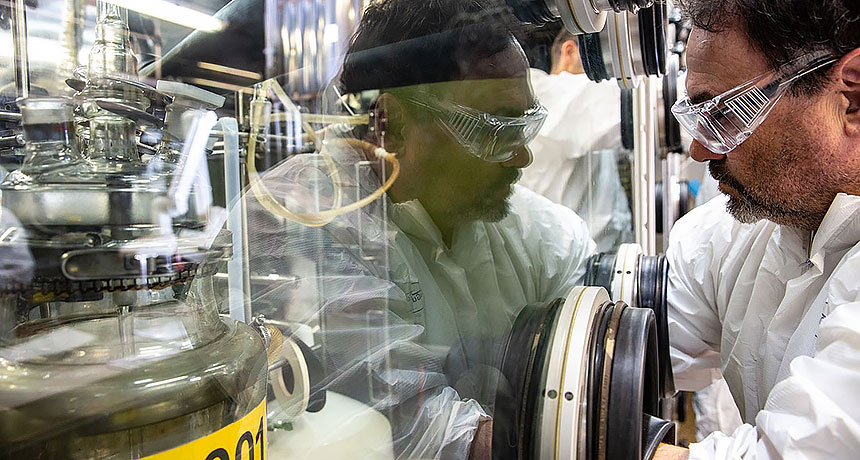
Transitioning To Hydrogen As A Carrier Gas For Gas Chromatography In Place Of Helium
Gas chromatography (GC) employs a variety of gases as a mobile phase, but helium has long been the preferred choice due to its inertness, safety, purity, and superior performance. However, despite its benefits, using helium as a carrier gas for GC analysis poses difficulties such as persistent supply chain problems and higher costs than alternatives like hydrogen. The world is currently facing its fourth major helium shortage since 2006, known as “Helium Shortage 4.0,” caused by events such as unexpected shutdowns of major helium plants in Texas and Russia, as well as the war in Ukraine, exacerbating the problem. Consequently, many labs are contemplating switching from helium to another carrier gas, with hydrogen being one of the most promising alternatives.
Switching from helium to hydrogen carrier gas for GC is not only motivated by the shortage of helium, but also because hydrogen is more abundant and less expensive overall, and allows for higher flow rates without sacrificing efficiency due to its higher optimum linear velocity. Despite these advantages, labs may be hesitant to make the switch due to the potential hazards of using a combustible gas, as well as the planning, time, and additional costs required for method transfer. Labs may also be concerned about the impact on the accuracy and reliability of their results. To address these challenges, here are some tips for effectively transferring methods and optimizing the use of hydrogen as a carrier gas.
Prioritize Safety
Having a better understanding of the safety risks associated with hydrogen is crucial for laboratories to make informed decisions about switching from helium to hydrogen for their GC applications. Given the combustibility of hydrogen, labs may naturally feel hesitant about adopting this carrier gas. However, a more comprehensive understanding of hydrogen’s safety risks can help labs to develop effective safety procedures and mitigate any potential hazards associated with the use of hydrogen in the lab.
Hydrogen has a high risk of combustion, with a volume concentration of 4% to 74.2% at atmospheric pressure, low ignition energy, and the highest burning velocity of any gas. Its flame is nonluminous, making it difficult to detect under bright lighting, and it can self-ignite when rapidly expanding from high pressure. While it is improbable for a small hydrogen leak to accumulate to 4% concentration in a well-ventilated lab, caution is advised as the potential for explosion increases if hydrogen builds up in the GC oven or mass spectrometer. The rapid expansion of hydrogen from high-pressure cylinders also poses a significant risk. Understanding these safety risks is critical to making informed decisions about switching and developing appropriate safety procedures for hydrogen use.
As a result, transitioning from helium to hydrogen necessitates heightened attention and safety education to guarantee that all users are aware of the risks and how to reduce them. It is crucial to prevent and identify leaks, and comprehensive leak checks should be performed on a regular basis. Users must ensure that the gas supply is turned off when the GC system is not in operation. Before making the change, dangers such as possible ignition sources should be identified and resolved. In this high-risk region, the installation of a hydrogen sensor and alarm inside the column oven provides extra protection against gas accumulation.
High-pressure gas cylinders can present a greater risk of releasing high concentrations of hydrogen into the air and potentially causing an explosion, compared to hydrogen gas generators. When cylinders are used, it is crucial to properly store them in a well-ventilated area, shield them from direct sunlight or temperatures exceeding 40°C, and secure them using a stand or chain to prevent tipping. Before every operation, tubing leading from the cylinder to the GC should be checked for leaks, and hydrogen should never be released directly into the air. Laboratories should consider investing in a hydrogen gas generator, which operates at low pressure, stores minimal volumes of gas at once, and often includes automatic shut-down features that prevent additional gas from being released if a leak or malfunction is detected.
Simplify The Beginning
While the idea of converting a GC method based on helium carrier gas to one that employs hydrogen gas may seem daunting, with considerations of various physical, chemical, and mathematical principles such as resolution, efficiency, retention time, peak shape, and more, modern GC instruments are generally designed to make this transition straightforward. Moreover, in this digital age, knowledge and resources are easily accessible to provide chromatographers with guidance and answers to any questions they may have throughout the process.
The initial step laboratories should take is to confirm whether the regulated methods they are currently using with helium can be adapted to accommodate hydrogen as an alternative carrier gas, as some methods may not permit the use of any other carrier gas. Additionally, chromatographers ought to seek out application notes and references in literature that describe successful hydrogen gas-based analyses of samples similar to their own, as these can offer valuable insights to facilitate the transition between methods.
To start the transition, it is recommended to keep most of the parameters the same and perform a comparison of chromatograms before and after changing the gas to establish a baseline understanding of its effect on the performance. In certain cases, switching the gas source and setting the instrument to hydrogen carrier gas mode, with the same column, linear velocity, and temperature program used with helium, may produce similar results and retention times as previously observed.
It is important to note that in contrast to liquid chromatography (LC) analysis, gas chromatography (GC) analysis does not depend on chemical reactions between the carrier gas and the analyte, so substituting the mobile phase is not as complicated as it may initially appear. By examining a Van Deemter plot, it can be observed that the efficiency of helium and hydrogen is quite similar at average linear velocities of 20-30 cm/sec. Although hydrogen can be utilized at higher linear velocities than helium, it is recommended to maintain a consistent linear velocity initially to allow for a straightforward comparison of the performance of the gases.
Converting GC-mass spectrometry (MS) methods to hydrogen carrier gas requires additional hardware changes and conditioning, and may lead to more pronounced problems with sensitivity and peak shape during the initial stages of the transition. This is due to the fact that hydrogen has a lower viscosity than helium, which requires greater vacuum pump efficiency to maintain the required vacuum levels. Failure to maintain vacuum levels can lead to negative impacts on sensitivity and can also pose a risk of hydrogen buildup in the detector. Additionally, hydrogen may interact differently within the ion source compared to helium and may displace contaminants, leading to very noisy spectra when switching to hydrogen gas.
To ensure a successful conversion of GC-MS methods from helium to hydrogen, more thorough planning is necessary to prevent system pumping capacity from being exceeded and to address potential issues with the ion source. Proper conditioning of the system to the new gas can take several days, and it may be necessary to switch to a source optimized for hydrogen carrier gas use or to initially switch to a lower internal diameter column to prevent excessively low or negative inlet pressures.
Utilize the Advantages of Hydrogen Gas
After successfully converting to a new carrier gas for your GC, you can take advantage of the unique benefits of hydrogen to improve your analytical throughput. You can achieve this by using a method translator tool that automatically calculates the necessary adjustments to your method parameters, enabling you to achieve the best possible performance in terms of speed and efficiency. Method translation tools are readily available both in GC software and online platforms, such as Restek’s free online EZGC Method Translator, which includes options for translating methods from helium to hydrogen and offers recommended flow rates and oven programs to achieve the desired balance of speed and resolution, even for GC-MS analysis.
When transitioning from helium to hydrogen carrier gas, chromatographers can potentially reduce analysis times by 1.5 to 2 times with only a minimal reduction in separation efficiency. The faster elution times offered by hydrogen also allows for lower operating temperatures, which can increase column longevity. Another benefit is that high-purity hydrogen can be generated on demand from water, providing greater convenience, space savings, and cost savings compared to helium, which requires cylinders. Laboratories may consider investing in a hydrogen generator for their GC applications to maximize these benefits.
In light of ongoing helium supply challenges, laboratories are increasingly exploring and validating methods for using hydrogen carrier gas. Many manufacturers now provide resources and services to assist customers with their method conversion needs. While hydrogen may not be the ideal solution for every lab, staying informed about alternative gas options can help lab managers be better prepared for potential future shortages.
This article provides a starting point for those considering the transition from helium to hydrogen carrier gas in their gas chromatography (GC) methods. While we have aimed to cover the key considerations and potential benefits of this change, we understand that each lab’s situation may vary and may require more specific advice or guidance. That’s where the experts at High Vac Depot come in.
Our team of experienced professionals can help answer any questions you may have about switching to hydrogen, from the technical aspects of hardware and software changes to optimizing your method parameters for improved performance. We can also help you select the right equipment and accessories to make the transition as smooth and cost-effective as possible.
Furthermore, our knowledgeable staff can provide you with additional resources and references to further assist you in making an informed decision about carrier gas alternatives. Whether you are new to GC analysis or an experienced chromatographer looking to explore new options, we are here to support you.
You can reach out to us at any time by phone or email to learn more about our products and services. Our goal is to help you achieve the best results for your applications while ensuring that you have the tools and knowledge to keep up with the changing landscape of GC analysis.






Leave a Reply
You must be logged in to post a comment.