

13May
13Oct
Common Leak Checking Configurations
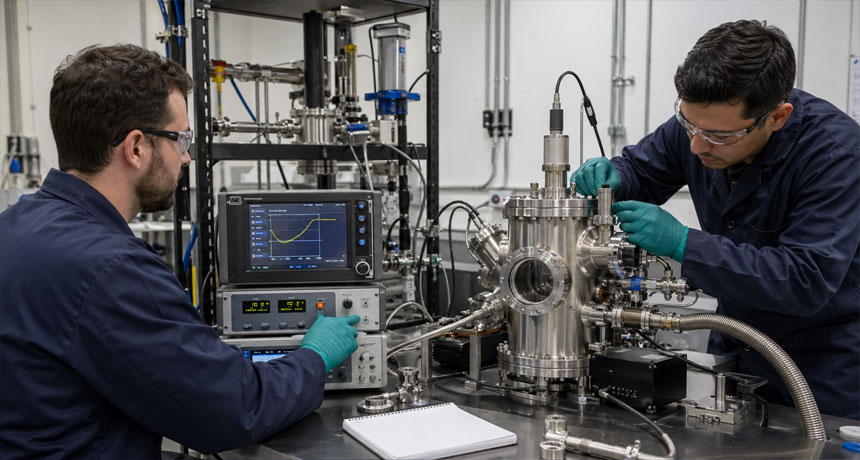
In industries that rely on vacuum technology, ensuring leak-tight systems is of paramount importance. A leak in a vacuum system can compromise efficiency, accuracy, and safety. To mitigate such issues, various leak checking configurations and procedures have been developed to guarantee the integrity of these systems. In this article, we will delve into common leak checking configurations used in vacuum technology and discuss their significance in maintaining reliable vacuum systems.
17Jan
Considerations For Custom Seal Design
Seals are integral to hydraulics and pneumatics systems in industrial and consumer applications. A stamp can be defined as “a mechanical device which prevents fluid leakage from one part to another, the most common being an O-ring, but also including ball or piston ones. A custom gasket design requires some key considerations when deciding on the type of high vac depot best suited for a specific application. A proper gasket design must be employed to minimize the risk of any...
22Aug
How To Inspect A Seal Surface
Seals are used in a variety of machines. Their purpose is to guard against any kind of leak from gas, water, or air. The main idea in using them is to greatly reduce the loss of any substance in a machine or an engine. Some of the most common uses for sealants are in vacuum systems. They are complex setups that are mainly used in major industries. Oil is transported through the tank right from the source. Good vacuum systems...
14Jun
Bellows: Hydro-Formed vs. Edge-Welded
Metal bellows have been in use for centuries. Over the years, they have been major components in sealing applications and demanding sensing for industries. They are the perfect solution for dealing with pressure or installation issues. Bellows can convert the changes in their internal and external pressures. They can deflect elastically to respond and contain the force applied to them and, in turn, exert a reactive force. Metal bellows come in two types; hydro-formed and edge-welded. This article will delve...
12May
O-Ring Seals And Design Considerations
An O-ring is a tubular piece of material, either an elastomer or metal, with a cross-section in the shape of a circle that can be compressed to fit tightly into a circular grove and seal against the sides of the track. An O-ring, also known as a packing, is a flexible gasket in the shape of a loop — it is a elastomer with a round cross-section designed to be seated in a groove and compressed during assembly between two...
12Apr
Metal Seals vs Elastomers
Elastomer seals are typically used in gas loads because they don’t require any compression to seal. However, the sealing performance depends on the pressure it takes to create a leak-tight seal. Metal seals are made by compressing the metal material to achieve a leak-tight seal at atmospheric pressures or less.
19Jan
Proper Cleaning of Vacuum Components
Clean surfaces are a must-have when dealing with a vacuum system and its accompanying technology. There’s a need to ensure that all impurities get removed from its surfaces. Their removal guarantees that they won’t desorb when exposed to vacuum conditions. If desorbed, they may accumulate on the vacuum pump or other similar components. In some cases, they could also produce gases that pollute the surrounding environment, making it difficult to breathe.
14Dec
Why Silver-Plated Hardware Matters
Silver-plated hardware is a must for many industries and laboratories that deal with high voltage and high current applications. Silver-plated hardware in products is used for many different purposes. Silver is an excellent conductor compared to other metal materials, and silver-plated hardware is used in the medical field to produce x-ray machines, electrocardiograms, and even metal detectors.
12Nov

