13Feb
23Jan
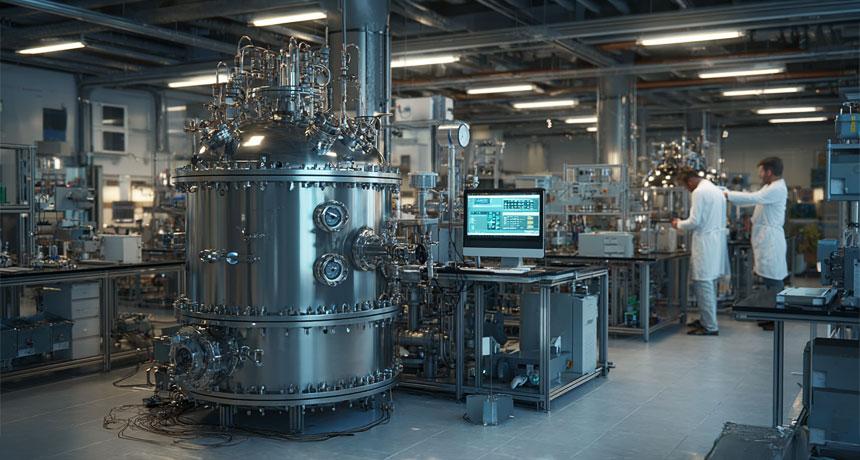
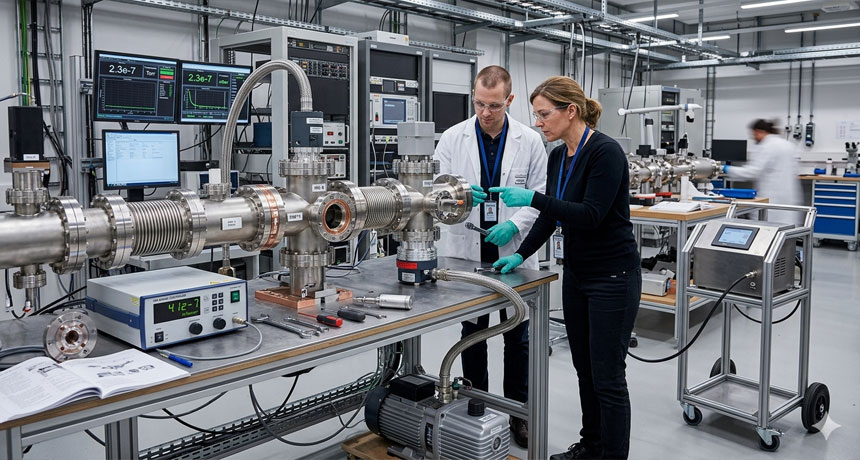
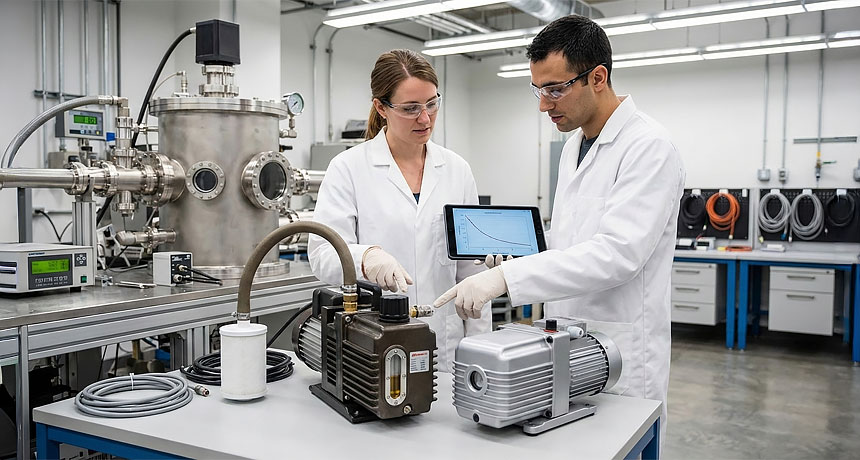
Comparing Oil-Sealed vs Oil-Free Vacuum Pumps
Choosing between an oil-sealed (wet) pump and an oil-free (dry) pump is one of the most consequential decisions in a vacuum system design. It affects everything downstream—base pressure stability, contamination risk, maintenance workload, uptime, and even how forgiving the system is to water vapor and process byproducts. The “right” answer depends on how clean your process must be, how much vapor you expect, what pressure range you need, and what kind of lifecycle cost you can tolerate. This article breaks...
09Jan
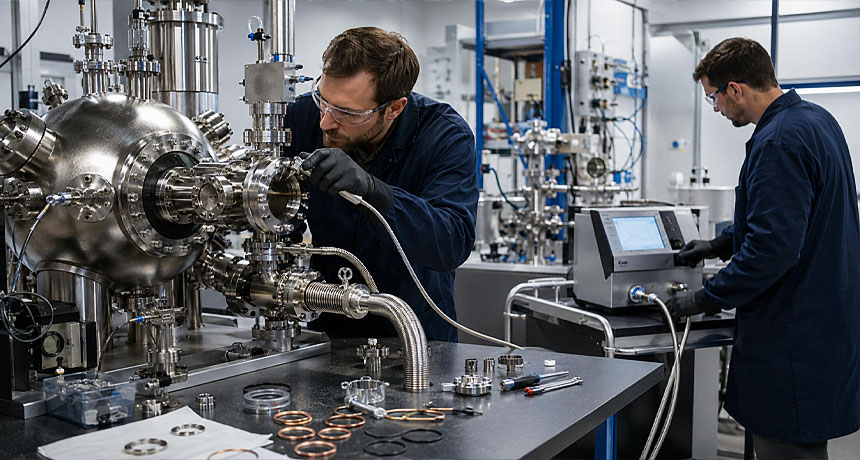
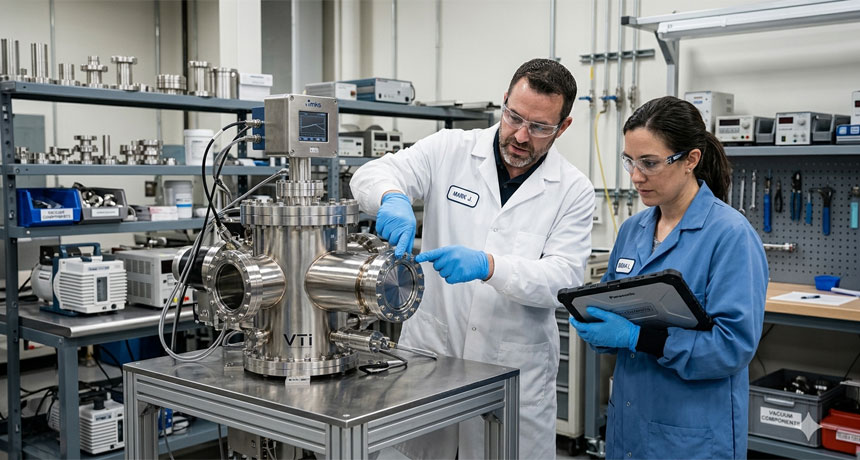
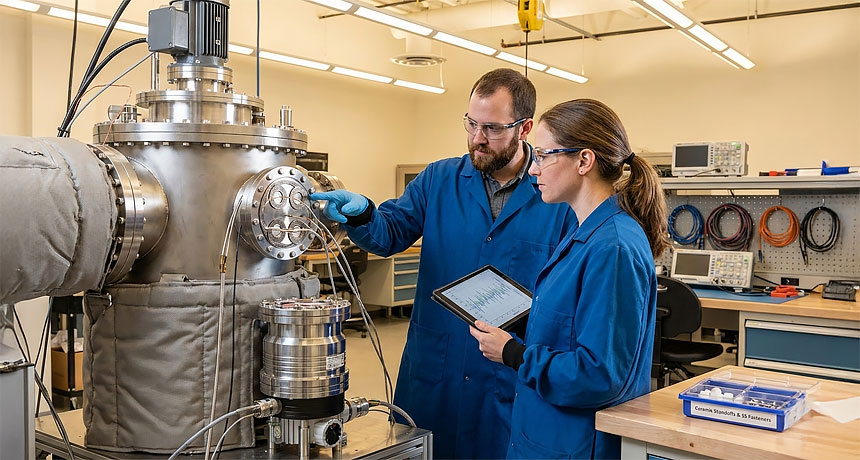
Choosing the Right Materials for High-Temperature Vacuum Applications
High-temperature vacuum work is unforgiving because it stacks multiple failure modes on top of each other. Elevated heat drives outgassing, accelerates diffusion and reactions, and magnifies any mismatch in thermal expansion. Meanwhile, vacuum removes convective cooling and eliminates the “forgiveness” of atmospheric contamination—so a material that behaves perfectly well in air can become a major source of background gas, particulates, or seal failure in a hot vacuum environment. Choosing materials thoughtfully up front is one of the most cost-effective ways...
12Dec
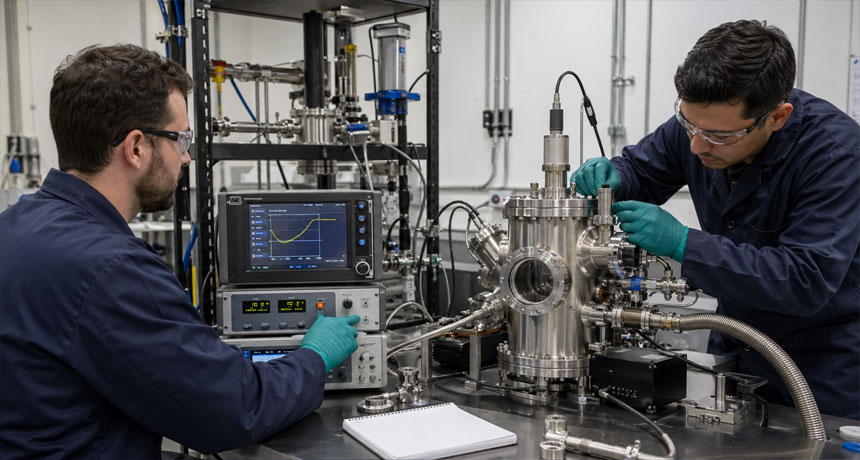
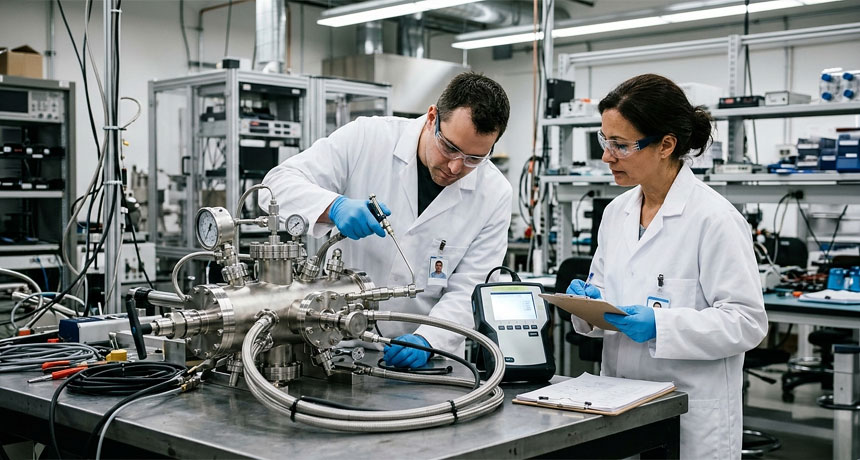
How to Minimize Virtual Leaks in Complex Vacuum Systems
Achieving and maintaining high or ultra-high vacuum is rarely limited by pump performance alone. In many advanced systems, especially those with complex geometries, persistent pressure rise and long pump-down times are caused not by real leaks—but by virtual leaks. These hidden gas sources can mimic external leaks, frustrate troubleshooting efforts, and compromise system performance if they are not properly addressed.
14Nov
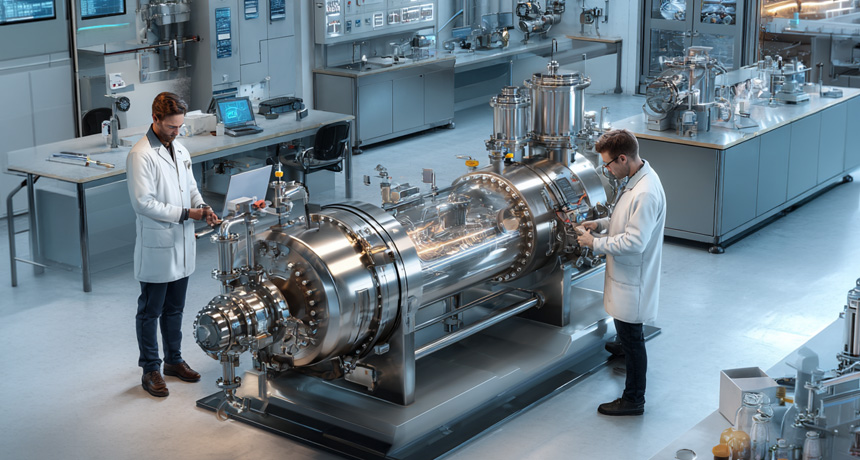
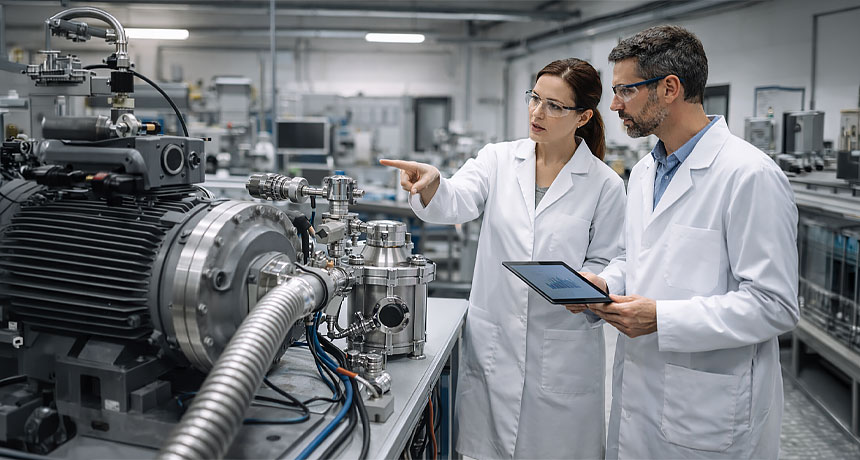
How Ionization Gauges Measure Vacuum Pressure
Measuring vacuum accurately is just as important as generating it. In the high and ultra-high vacuum (UHV) range, conventional mechanical gauges simply can’t see low enough. That’s where ionization gauges come in. These instruments are the workhorses of high-vacuum measurement, giving researchers and manufacturers reliable readings in pressure ranges that would otherwise be invisible.
12Sep
How to Perform a Bubble Leak Test for Low Vacuum Systems
Maintaining leak-tight integrity is one of the most important factors in ensuring reliable vacuum performance. Even small leaks can compromise pressure stability, lengthen pump-down times, and contaminate processes. For high and ultra-high vacuum systems, helium mass-spectrometer leak detection is the gold standard. But when you’re working with low vacuum systems (roughly down to 10⁻³ mbar / 10⁻³ torr), a more practical and cost-effective method often makes more sense: the bubble leak test.
22Aug
Diagnosing Pressure Instabilities in a Vacuum System
Pressure stability is the foundation of any high-vacuum or ultra-high-vacuum (UHV) process. Whether you are operating a semiconductor fabrication chamber, a thin-film deposition system, or a research instrument, even minor fluctuations in pressure can create major disruptions. Pressure instabilities lead to inconsistent process results, longer pump-down times, contamination, or even equipment damage.
27Jun
How to Select the Right Gauge for Measuring Ultra-High Vacuum
Achieving ultra-high vacuum (UHV)—defined as pressures below 10⁻⁷ mbar (or torr)—is a cornerstone of many advanced technologies, including semiconductor fabrication, surface science, particle physics, and aerospace research. But simply reaching these levels is only half the battle. Measuring them accurately is just as critical—and significantly more challenging. At such extreme vacuums, traditional gauges no longer function reliably. Choosing the right vacuum gauge for UHV conditions requires a clear understanding of gauge technologies, sensitivity ranges, materials, and system compatibility. In this...
09May
Understanding the Relationship Between Vacuum Level and Pumping Speed
In any vacuum system — whether for research, manufacturing, or analytical applications — two critical performance indicators are vacuum level and pumping speed. These parameters are closely linked, and understanding how they interact is key to optimizing your vacuum process. Misunderstandings in this area can lead to poor system design, inefficient pump selection, or misinterpreted performance expectations. This article explores the relationship between vacuum level and pumping speed, explains the physics and engineering behind it, and offers practical guidance for...
26Apr

