PLEASE NOTE: Due to global tariffs, prices may fluctuate. To better serve you, we reserve the right to add a surcharge to orders.

Author - High Vac Depot staff

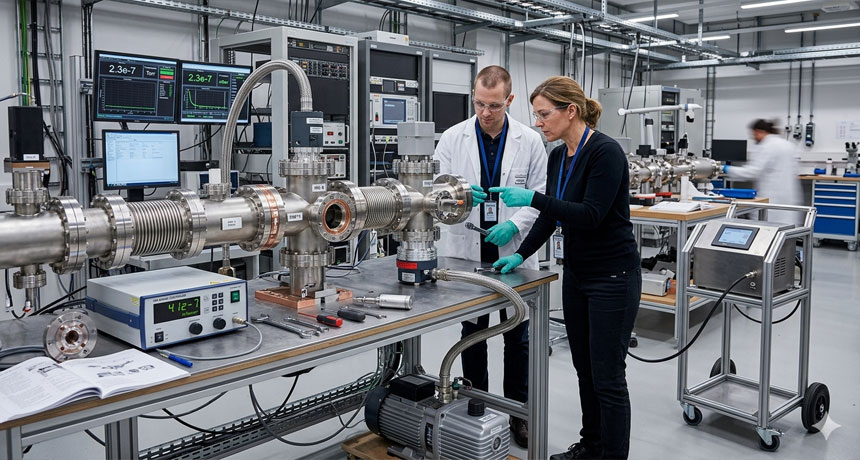
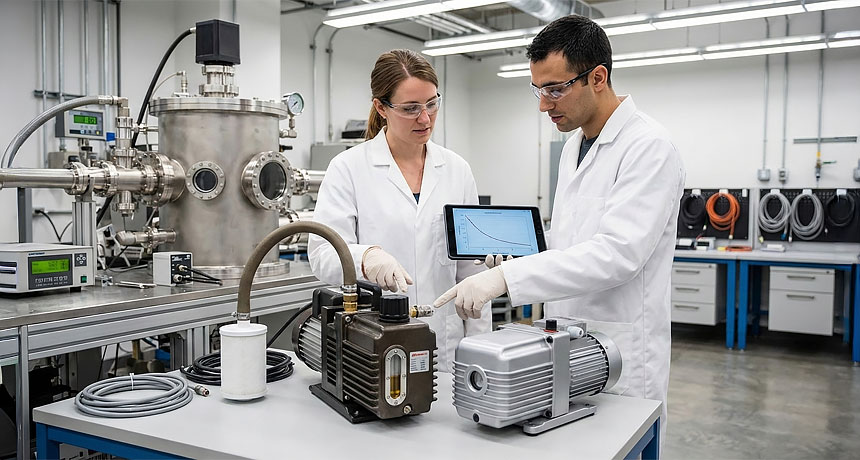
Can a Vacuum Pump Be Too Powerful for an Application?

A vacuum pump can absolutely be “too powerful”—not because it pulls too much vacuum (vacuum is bounded by physics and leaks), but because it can pull too much pumping speed and throughput for the system’s conductance, process behavior, and control needs. Oversizing often wastes money, increases operational risk, and can actually make results less stable. The goal is not “the biggest pump,” but the right effective pumping speed at the chamber—and the right level of control over pressure, gas load,...
Read more...

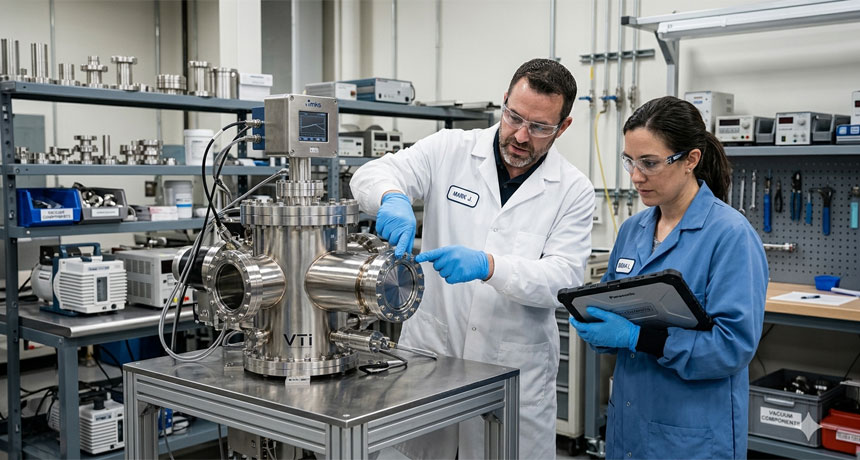
Comparing Oil-Sealed vs Oil-Free Vacuum Pumps

Choosing between an oil-sealed (wet) pump and an oil-free (dry) pump is one of the most consequential decisions in a vacuum system design. It affects everything downstream—base pressure stability, contamination risk, maintenance workload, uptime, and even how forgiving the system is to water vapor and process byproducts. The “right” answer depends on how clean your process must be, how much vapor you expect, what pressure range you need, and what kind of lifecycle cost you can tolerate. This article breaks...
Read more...

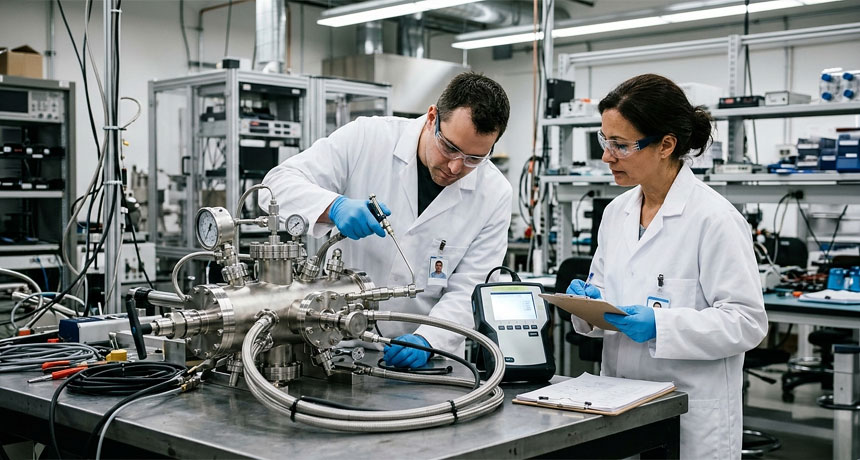
Choosing the Right Materials for High-Temperature Vacuum Applications

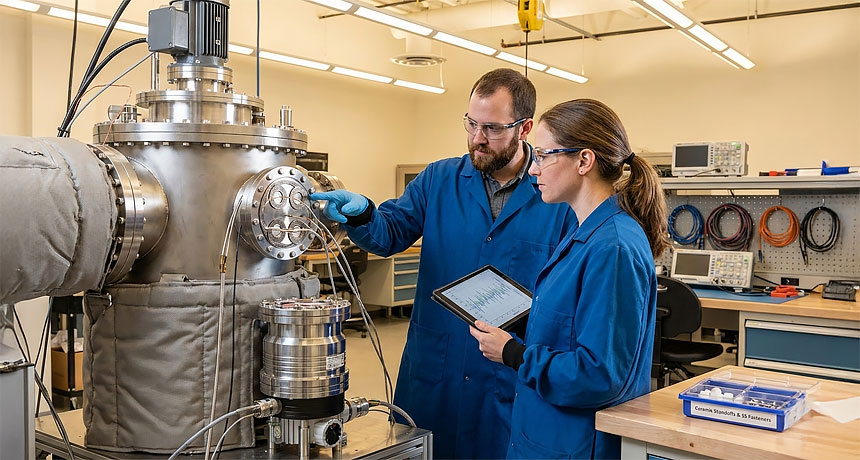
High-temperature vacuum work is unforgiving because it stacks multiple failure modes on top of each other. Elevated heat drives outgassing, accelerates diffusion and reactions, and magnifies any mismatch in thermal expansion. Meanwhile, vacuum removes convective cooling and eliminates the “forgiveness” of atmospheric contamination—so a material that behaves perfectly well in air can become a major source of background gas, particulates, or seal failure in a hot vacuum environment. Choosing materials thoughtfully up front is one of the most cost-effective ways...
Read more...

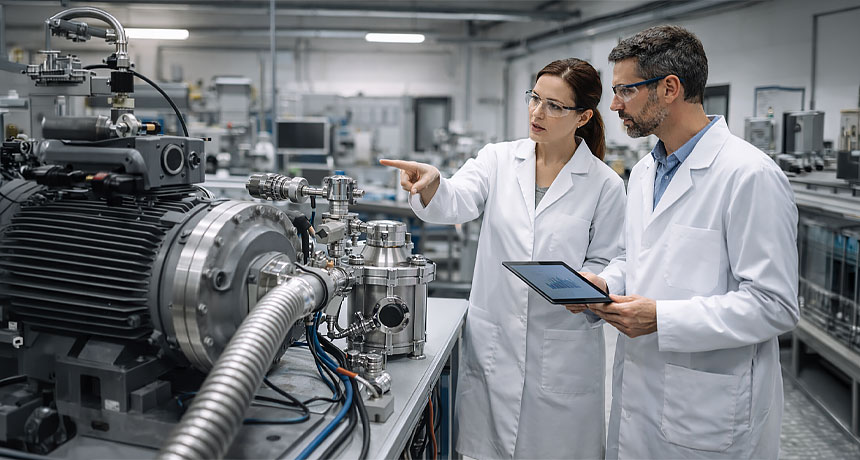
The Future of Scroll Pumps in Vacuum Technology

Scroll pumps have become a vital part of modern vacuum systems, especially in scientific, industrial, and analytical applications where clean, reliable pumping is essential. Over the past decade, scroll technology has rapidly evolved from a niche alternative to rotary vane pumps into a leading solution for laboratories and manufacturing environments that need oil-free performance. Now, as vacuum-dependent industries continue pushing the limits of efficiency, automation, and sustainability, scroll pumps are entering a new era.
Read more...

How to Minimize Virtual Leaks in Complex Vacuum Systems

Achieving and maintaining high or ultra-high vacuum is rarely limited by pump performance alone. In many advanced systems, especially those with complex geometries, persistent pressure rise and long pump-down times are caused not by real leaks—but by virtual leaks. These hidden gas sources can mimic external leaks, frustrate troubleshooting efforts, and compromise system performance if they are not properly addressed.
Read more...

How Superconducting Materials Are Affecting Vacuum Applications

Superconductors used to belong mostly to the realm of fundamental physics. Today, they’re at the heart of real-world systems: particle accelerators, MRI and NMR machines, fusion prototypes, high-field magnets, and rapidly growing quantum computing platforms. As these technologies move from one-off experiments to complex facilities and commercial products, they bring new expectations and challenges for vacuum systems.
Read more...

How Ionization Gauges Measure Vacuum Pressure

Measuring vacuum accurately is just as important as generating it. In the high and ultra-high vacuum (UHV) range, conventional mechanical gauges simply can’t see low enough. That’s where ionization gauges come in. These instruments are the workhorses of high-vacuum measurement, giving researchers and manufacturers reliable readings in pressure ranges that would otherwise be invisible.
Read more...

How Dry Scroll Pumps Are Revolutionizing Laboratory Applications

For decades, oil-sealed rotary vane pumps were the backbone of laboratory vacuum systems. They provided dependable performance, but at a cost—oil leaks, backstreaming, contamination, and frequent maintenance. As research environments have evolved toward cleaner, more energy-efficient, and automation-friendly operations, those drawbacks have become harder to justify. Enter the dry scroll pump: a quiet, oil-free alternative that’s transforming how laboratories achieve and maintain vacuum.
Read more...

The Impact of Green Technology on Vacuum Pump Design

In today’s global push toward sustainability, every corner of industrial manufacturing is being reimagined. Vacuum systems—vital to processes ranging from semiconductor production to food packaging—are no exception. As companies commit to lowering their environmental footprint, vacuum pump design is evolving to meet new energy, emissions, and lifecycle standards. Green technology has driven a new era of energy-efficient, oil-free, and smart-controlled vacuum systems that perform better while consuming fewer resources.
Read more...

The Importance of Vacuum in Additive Manufacturing (3D Printing)

Additive manufacturing (AM), more widely known as 3D printing, has grown from a rapid-prototyping novelty into a cornerstone of modern industry. From aerospace components and medical implants to electronics and energy systems, 3D printing enables unprecedented design flexibility and material efficiency. But as the field moves beyond plastics into metals, ceramics, and advanced composites, one enabling technology has quietly become essential: vacuum systems.
Read more...

"*" indicates required fields

This field is for validation purposes and should be left unchanged.
I would like to request a quote for the following product:
This field is hidden when viewing the form
Anything else we need to know? Make, model, or other details.
Name*
Shipping Address*
A shipping address is required to receive a quote so we can more easily provide you with the best price possible.