


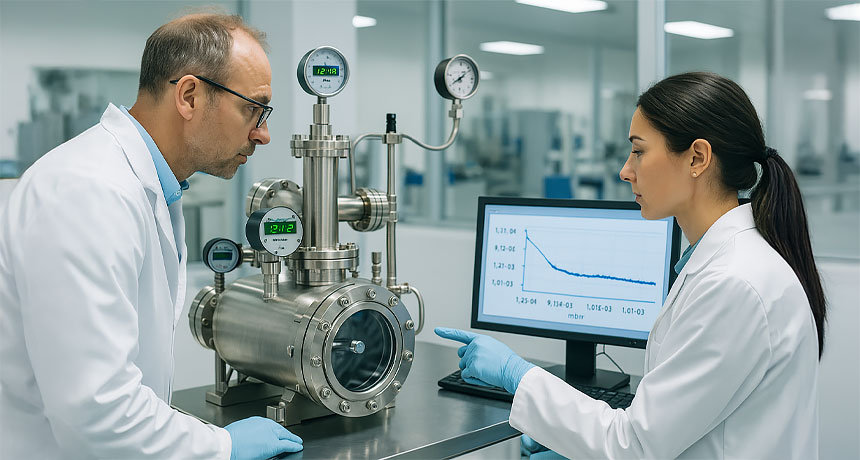
Diagnosing Pressure Instabilities in a Vacuum System
Pressure stability is the foundation of any high-vacuum or ultra-high-vacuum (UHV) process. Whether you are operating a semiconductor fabrication chamber, a thin-film deposition system, or a research instrument, even minor fluctuations in pressure can create major disruptions. Pressure instabilities lead to inconsistent process results, longer pump-down times, contamination, or even equipment damage.
Diagnosing these instabilities requires a systematic approach: understanding the symptoms, identifying root causes, and applying corrective actions. This article explores the main sources of pressure instability in vacuum systems and offers practical strategies to restore consistent performance.
Recognizing Pressure Instabilities
Before diagnosing, it is important to recognize what pressure instability looks like:
- Erratic Pressure Readings — Gauge signals fluctuate unpredictably, often in cycles or spikes.
- Slow Pump-Down — The system appears unable to reach its normal base pressure in the usual timeframe.
- Unexpected Outgassing Signatures — Residual gas analyzers (RGAs) detect abnormal gas species or concentrations.
- Process Failures — Thin-film defects, inconsistent etch rates, or contamination on wafers or optics.
Pressure instability can stem from leaks, pump issues, contamination, or system design problems.
Common Causes of Pressure Instabilities
1. Leaks in the System
Leaks are one of the most common causes of unstable pressures. They may be:
- Real leaks: Physical holes, cracks, or loose fittings.
- Virtual leaks: Trapped pockets of gas that slowly escape, often from threaded connections or blind holes.
- Permeation leaks: Gas molecules diffusing through elastomer seals.
Diagnostics:
- Perform helium leak detection using a mass spectrometer.
- Inspect seals, gaskets, and joints for wear or damage.
- Check O-rings for chemical degradation or flattening.
2. Outgassing from Materials
Even in a sealed system, materials can release absorbed gases when exposed to vacuum. Outgassing is especially problematic with polymers, adhesives, and poorly cleaned metals.
Diagnostics:
- Use an RGA to identify specific species (water, hydrocarbons, etc.).
- Bake the system to drive off absorbed volatiles.
- Replace high-outgassing materials with vacuum-rated alternatives.
3. Pumping Issues
Vacuum pumps themselves may introduce instability, including:
- Insufficient pumping speed for the chamber volume.
- Oil backstreaming from rotary vane pumps contaminating the chamber.
- Malfunctioning turbomolecular or cryopumps reducing system performance.
Diagnostics:
- Compare actual pump-down times with specifications.
- Monitor pump current draw and vibration levels.
- Inspect traps, filters, and forelines for blockages.
4. Contamination and Residues
Hydrocarbons, solvents, or process byproducts can coat chamber walls and slowly desorb, creating unstable pressures.
Diagnostics:
- Inspect chamber walls for visible residues.
- Use surface cleaning, plasma cleaning, or solvent rinsing.
- Monitor long-term RGA data for gradual increases in outgassing products.
5. Gauge and Sensor Problems
Sometimes the instability isn’t in the vacuum, but in the measurement itself:
- Faulty gauges can give false readings.
- Electrical noise can create spurious fluctuations.
- Poor placement of gauges may expose them to turbulence or local gas plumes.
Diagnostics:
- Cross-check readings with a secondary gauge.
- Inspect cables, connectors, and electronics for noise sources.
- Relocate gauges to representative positions in the chamber.
6. System Design Flaws
Instabilities can also come from improper system design:
- Dead volumes that trap gas.
- Insufficient conductance between chamber and pumps.
- Overuse of elastomer seals in applications requiring UHV.
Diagnostics:
- Review vacuum conductance calculations.
- Perform flow modeling to evaluate gas dynamics.
- Redesign fittings or replace elastomer seals with metal gaskets where appropriate.
Step-by-Step Diagnostic Process
- Baseline Measurement
Record pump-down curve data for comparison with specifications and historical performance. - Check for Leaks
Use helium leak detection as the first test; repair or replace any leaking seals or fittings. - Evaluate Materials and Cleanliness
Inspect system materials against outgassing standards; perform chamber bakeout if necessary. - Pump Performance Testing
Measure actual pumping speed and compare with rated values; swap pumps if necessary to confirm diagnosis. - Gauge Verification
Test multiple gauges to rule out measurement errors; calibrate sensors periodically. - Long-Term Monitoring
Use an RGA for continuous monitoring; look for recurring species that indicate contamination or leaks.
Case Study: Instability in a Coating System
A thin-film deposition system experienced unstable chamber pressures, causing poor film uniformity. Initial tests suggested leaks, but helium leak detection found none. An RGA identified water vapor spikes, pointing to outgassing. Engineers discovered silicone-based sealants inside the chamber, which were continuously releasing volatiles. Replacing them with low-outgassing alternatives and baking the chamber restored stable pressure and improved film quality.
Preventive Measures
- Use UHV-rated materials like stainless steel and ceramic wherever possible.
- Limit polymer use and choose low-outgassing grades when necessary.
- Regular maintenance of pumps, seals, and filters to maintain performance.
- Bakeout protocols to remove residual gases prior to critical processes.
- Data logging of pressure and RGA signals to catch problems early.
Conclusion
Diagnosing pressure instabilities in vacuum systems requires careful observation, systematic testing, and an understanding of the many variables that can affect pressure. From leaks and pump issues to outgassing and gauge errors, every factor must be considered. By applying structured diagnostics, you can restore stability, improve process yields, and extend equipment life.
If your vacuum system is suffering from unexplained pressure fluctuations, the experts at High Vac Depot are here to help. We can assist with system evaluation, component recommendations, and practical solutions tailored to your specific application. Contact us today to get your vacuum system back to peak performance.




Leave a Reply
You must be logged in to post a comment.