
26Sep
12Sep
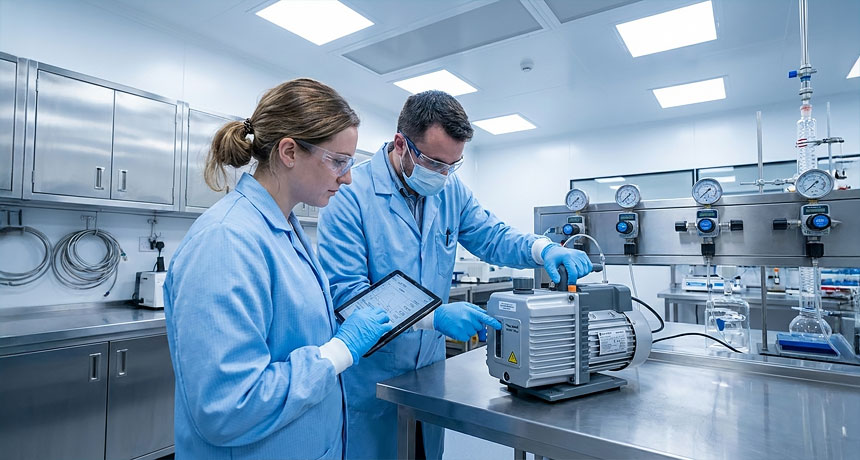
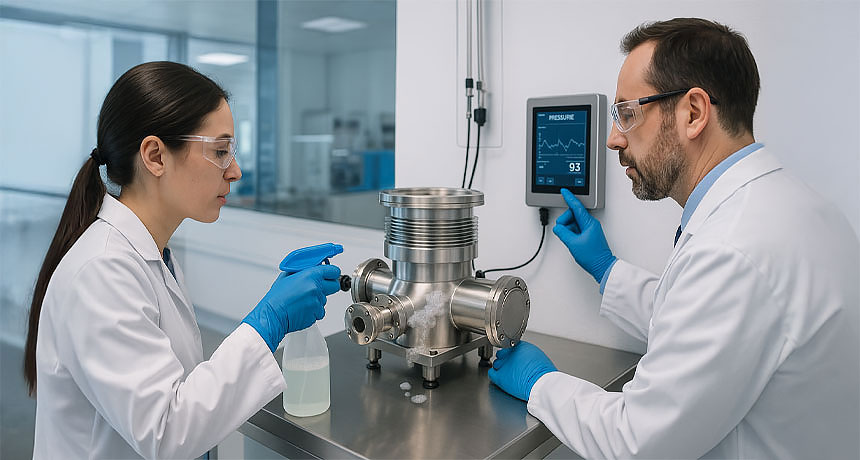
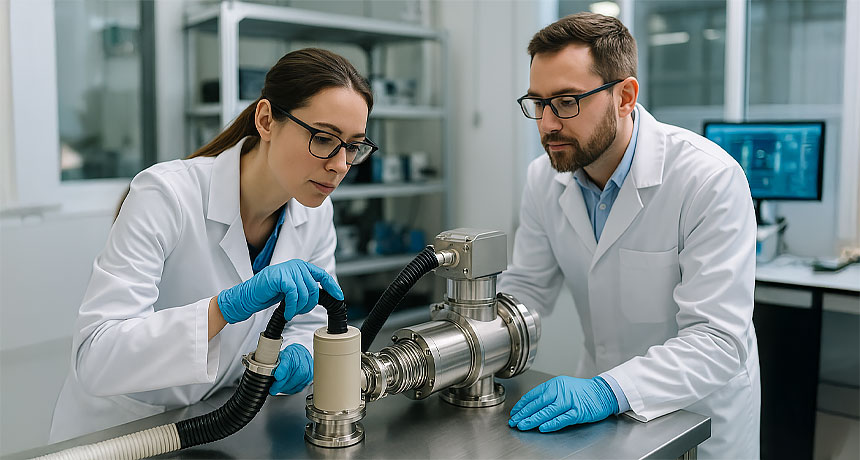
How to Perform a Bubble Leak Test for Low Vacuum Systems
Maintaining leak-tight integrity is one of the most important factors in ensuring reliable vacuum performance. Even small leaks can compromise pressure stability, lengthen pump-down times, and contaminate processes. For high and ultra-high vacuum systems, helium mass-spectrometer leak detection is the gold standard. But when you’re working with low vacuum systems (roughly down to 10⁻³ mbar / 10⁻³ torr), a more practical and cost-effective method often makes more sense: the bubble leak test.
22Aug
Diagnosing Pressure Instabilities in a Vacuum System
Pressure stability is the foundation of any high-vacuum or ultra-high-vacuum (UHV) process. Whether you are operating a semiconductor fabrication chamber, a thin-film deposition system, or a research instrument, even minor fluctuations in pressure can create major disruptions. Pressure instabilities lead to inconsistent process results, longer pump-down times, contamination, or even equipment damage.
08Aug
How Outgassing of Polymers Affects Vacuum Systems
In high-vacuum and ultra-high-vacuum (UHV) environments, the presence of even trace amounts of gas molecules can affect the performance, accuracy, and longevity of your equipment. While many engineers focus on leak tightness and pump efficiency, one less obvious—yet equally critical—factor is outgassing. This phenomenon is especially important when working with polymers inside a vacuum chamber or system.
25Jul
The Future of Vacuum Pumps: Where the Industry Is Heading
As we move further into 2025 and beyond, vacuum technology is experiencing a profound transformation driven by trends in sustainability, digitalization, miniaturization, and new market demands. Whether it’s in semiconductor fabs, pharmaceutical production, aerospace, or clean energy, the next generation of vacuum pumps isn’t just about pressure — it’s about intelligence, efficiency, versatility, and resilience. In this article, we’ll explore the major developments shaping the future of vacuum pumps and what they mean for users and system designers.
11Jul
Comparing Ceramic vs Metal Seals for High Vacuum Applications
In the demanding world of high vacuum and ultra-high vacuum (UHV) environments, choosing the right sealing material is critical. Whether you’re working in semiconductor fabrication, space simulation, surface analysis, or high-energy physics, the seals in your vacuum system help define the limits of your performance. Two of the most trusted materials for high vacuum sealing are ceramic and metal—each with distinct advantages, limitations, and ideal use cases. In this post, we’ll explore how ceramic and metal seals compare in terms...
27Jun
How to Select the Right Gauge for Measuring Ultra-High Vacuum
Achieving ultra-high vacuum (UHV)—defined as pressures below 10⁻⁷ mbar (or torr)—is a cornerstone of many advanced technologies, including semiconductor fabrication, surface science, particle physics, and aerospace research. But simply reaching these levels is only half the battle. Measuring them accurately is just as critical—and significantly more challenging. At such extreme vacuums, traditional gauges no longer function reliably. Choosing the right vacuum gauge for UHV conditions requires a clear understanding of gauge technologies, sensitivity ranges, materials, and system compatibility. In this...
13Jun
Using Vacuum Systems in Food Processing and Preservation
Vacuum technology isn’t just for laboratories, industrial manufacturing, or scientific research — it’s also a powerful ally in the food industry. From extending shelf life to improving flavor and texture, vacuum systems are central to many modern food processing and preservation techniques. In this post, we’ll explore why vacuum matters in food applications, examine popular vacuum-based processes, and offer best practices for operators looking to optimize their systems for hygiene, efficiency, and quality.
23May
The Role of Vacuum in Nanotechnology Manufacturing
Nanotechnology, the science of manipulating matter at the atomic or molecular scale, has rapidly transformed a wide range of industries, from electronics and medicine to energy and materials science. As components shrink to the scale of nanometers—one billionth of a meter—precision and cleanliness become paramount. In this ultra-sensitive world, even a single stray molecule can cause defects. That’s where vacuum technology comes in.
09May

