



Suggestions For Ensuring The Highest Performance Of Your Vacuum System
Here are a few tips to make sure your vacuum system is performing optimally. A faulty vacuum system could cause a production halt. This system is made up of several components that must all work together to ensure that the system functions properly.
Parts Of A Vacuum System
The following are the components of a vacuum system.
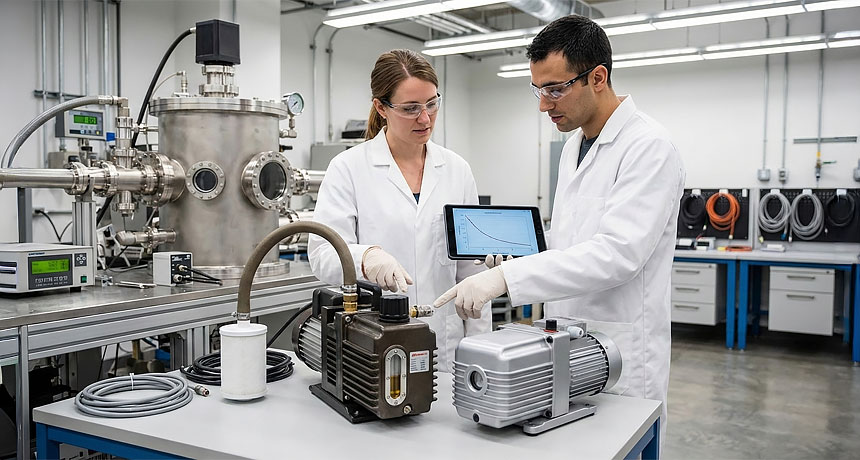
- Vacuum pumps: Vacuum pumps are the essential parts of vacuum systems. They serve to remove air molecules from the vacuum chamber, leaving behind a partial vacuum.
- Vacuum chamber: This is the enclosure from which a vacuum pump removes air molecules to leave a vacuum.
- Monitoring and control equipment
- Vacuum pumping duct integrity control system
- Tools for vacuum measurement and gas analysis
All these parts, collectively, determine how great vacuum systems will perform. You probably wish your machine could perform just as great as it was when you first bought it. You may also be thinking of ways to properly operate your machine so that it performs well. Well, as with every machine, there is always wear and tear of parts. Worn-out parts are likely to affect your machine’s efficiency.
In addition to this, how you operate your machine determines how long your machine will last. Do you want to know how best to keep your machine working optimally? Below is a list of a few practical suggestions.
Tips To Ensure Your Vacuum System Is Working Excellently
Here are a few tips to enable you to take better care of your vacuum system.
Take care of your vacuum pump
There are different varieties of pumps, namely dry pumps, mechanical pumps, diffusion pumps, and blowers. Most vacuum systems have a mechanical pump.
To ensure that your vacuum pump is functioning at well, routine maintenance activities are necessary. Taking care of your pump requires you to know the tell-tale signs of a faulty pump. Here are some common symptoms of a faulty pump.
- Leakages: this will compromise the pumping capacity of the pump and consequently lead to reduced vacuum space
- Vibrations: Flooding in the pump, either by fluid or other foreign materials, can cause vibrations.
- Reduced fuel efficiency
- Fluctuating oil temperatures
- Abnormal oil levels
- Clogged valves
- Loose belts
- Oil contamination
A routine maintenance check will help you note these symptoms on time. That said, the most common issues you are likely to deal with are oil contamination and leakages. Contamination is destructive to the oil since it thins it. This is dangerous as it leads to increased pressure and, sometimes, pump failure.
Regular oil changes will help get rid of any contaminated oil, thereby extending the life of your pump.
The fastest way to determine if the oil has been contaminated is by checking its color. Normal vacuum oil is the color of honey. If it has a milky residue or becomes coffee-colored, it’s probably contaminated. While changing the oil, remember to clean or replace the filter in the oil mist eliminator.
Always select a suitable vacuum level for your pump
To keep your vacuum systems functioning well, always select the right vacuum level. Most modern vacuum systems can reach very low vacuum levels of 9 -9 Torr range. However, this kind of vacuum level is not necessary. Remember that extreme vacuum levels could lead to the vaporization of oxidation elements.
Fortunately, most industrial applications require an intermediate vacuum level that is less than 10 -5 Torr.
Although your system can reach extreme vacuum levels, there are several important aspects to consider. For instance, consider scenarios such as ingestion of harmful corrosive matter which are harmful to your pump. Remember that your systems and pumps will only function optimally if you use them properly. If you subject your pump to extreme applications, it will last.
Optimize your vacuum system design
A lot of vacuum systems are over-dimensional and consume too much energy. To add to this, they have a low output capacity due to their archaic designs. Most of the time, the systems used in machines do not have the requisite pump capacity needed by the said machines.
This leads to an overworked system and, subsequently, faster wear and tear. Your system can even break down due to overload.
On the other hand, an optimized vacuum apparatus is efficient and consumes less energy. A system upgrade is carried out in two phases. Phase one involves restructuring and modifying pump connectors and vacuum controls. The second stage involves fixing variable speed drives and replacing water ring pumps.
Check on the vacuum condenser
A vacuum condenser is an integral part of your system. If the condenser malfunctions, then the whole system is likely to jam as well. Vacuum condensers are especially vital in maintaining an ideal vacuum level. To ensure optimal condenser performance, consider the following tips.
- Keep your vapor condenser properly elevated
- Maintain an ideal pressure drop
- Consult a vacuum equipment supplier such as High Vac Depot when installing a condenser
Take care of your O-ring seals
Over time, the O-rings on your systems may lose their elasticity and become loose. A loose O-ring is detrimental to the system since air may get into the vacuum chamber.
Replace an O-ring as soon as it starts to loosen. Remember to choose the correct type and fit. Additionally, the O-ring material should be able to withstand the fluctuating temperatures of vacuum systems. A good O-ring is rounded, smooth, and free of any dust or debris. Before replacing it, be keen to lubricate it properly and consult a high vac depot.
If an O-ring gets exposed due to one reason or another, wipe it down to remove any foreign particles on its surface. The best way to wipe it is by using an alcohol-based liquid and a soft cloth. For added sealing and insulation, use silicone vacuum grease.
Conclusion
Vacuum systems are only as good as you take care of them. It is important to know the factors that affect the performance of your vacuum system. These will enable you to know when your system is not working properly. These factors include faulty pumps, inadequate conditions for the system to work, poor ultimate pressure, and slow evacuation time.






Leave a Reply
You must be logged in to post a comment.