


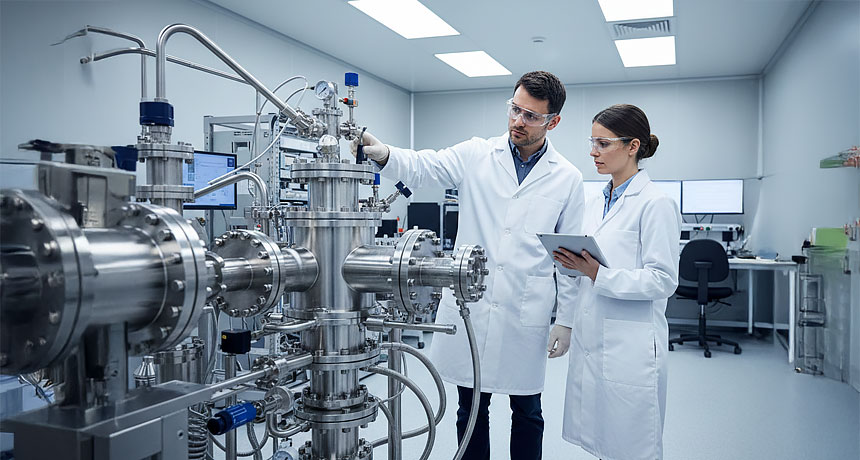
How to Minimize Virtual Leaks in Complex Vacuum Systems
Achieving and maintaining high or ultra-high vacuum is rarely limited by pump performance alone. In many advanced systems, especially those with complex geometries, persistent pressure rise and long pump-down times are caused not by real leaks—but by virtual leaks. These hidden gas sources can mimic external leaks, frustrate troubleshooting efforts, and compromise system performance if they are not properly addressed.
Virtual leaks are particularly common in research laboratories, semiconductor processing equipment, analytical instruments, and custom-built vacuum chambers. Understanding how they form—and how to design and assemble systems to avoid them—is essential for reliable vacuum operation. This article explains what virtual leaks are, why they occur, how to detect them, and best practices for minimizing their impact in complex vacuum systems.
What Is a Virtual Leak?
A virtual leak is not a true breach between the vacuum system and atmosphere. Instead, it is a trapped volume of gas inside the vacuum system that slowly releases gas into the main chamber over time. Because the gas emerges gradually, it can appear very similar to a small external leak when monitoring pressure behavior.
Common characteristics of virtual leaks include:
- Pressure that improves initially but stalls at a higher-than-expected base pressure
- Slow, steady pressure rise when pumps are isolated
- Leak detector responses that fade or fluctuate rather than showing a sharp signal
Because the gas originates inside the system itself, tightening flanges or replacing seals does nothing to eliminate the problem.
How Virtual Leaks Form
Virtual leaks are almost always created unintentionally during system design or assembly. They typically result from enclosed or poorly vented volumes that trap air during pump-down.
Trapped Volumes in Mechanical Assemblies
Some of the most common sources include:
- Blind tapped holes that do not vent into the vacuum space
- Bolts or screws inserted into threaded holes without vent grooves
- Overlapping metal parts that create narrow, enclosed gaps
- Double-walled structures or nested tubing
As pressure drops, gas trapped in these regions escapes slowly through microscopic clearances, feeding the chamber long after the rest of the system has been evacuated.
Improperly Designed Welds
Welded assemblies can also create virtual leaks if:
- Partial penetration welds leave sealed cavities
- Lap joints trap gas between layers
- Welds are not vacuum-rated or properly cleaned
Even high-quality welds can cause issues if internal volumes are not fully eliminated or vented.
Elastomer Seals and Gaskets
While elastomer seals do not usually create classic virtual leaks, they can contribute to similar symptoms through permeation and trapped gas pockets, especially if:
- O-rings are installed in improperly machined grooves
- Excess lubricant creates pockets behind the seal
- The seal geometry prevents full evacuation
Why Virtual Leaks Are Especially Problematic in Complex Systems
As vacuum systems become more complex, the risk of virtual leaks increases. Systems with multiple chambers, internal motion, diagnostic ports, and dense instrumentation are particularly vulnerable.
Long Pump-Down Times
Virtual leaks continuously supply gas, extending pump-down times far beyond what calculations predict. This can delay production runs, experiments, or maintenance cycles.
Elevated Base Pressure
Even powerful turbomolecular or cryogenic pumps cannot overcome a steady internal gas source indefinitely. Virtual leaks often define the lowest achievable pressure in an otherwise well-designed system.
Misleading Leak Detection Results
Helium leak detectors may show intermittent or drifting signals when probing virtual leaks, leading technicians to chase non-existent external leaks and waste valuable troubleshooting time.
Distinguishing Virtual Leaks from Real Leaks
Before attempting repairs, it’s important to determine whether you are dealing with a true leak or a virtual one.
Pressure Behavior Tests
A common method is a rate-of-rise test:
- Pump the system down to its lowest achievable pressure
- Isolate the pumps
- Monitor pressure increase over time
Virtual leaks typically show a slow, non-linear pressure rise, whereas real leaks often cause a more linear and repeatable pressure increase.
Helium Leak Detection Clues
With helium leak detection:
- A real leak produces an immediate, repeatable response when helium is applied
- A virtual leak may respond weakly, slowly, or inconsistently as trapped gas redistributes
If helium signals appear without external helium application, internal trapped volumes are a strong suspect.
Design Strategies to Prevent Virtual Leaks
The best way to deal with virtual leaks is to prevent them during the design phase.
Vent All Blind Holes
Any threaded hole used in a vacuum boundary should:
- Be vented through to the vacuum side
- Use vented screws or bolts
- Include machined vent grooves where appropriate
This allows trapped gas to evacuate quickly during pump-down.
Avoid Enclosed Volumes
Design assemblies to eliminate:
- Overlapping plates without vent paths
- Nested tubing sections
- Sealed cavities inside structural components
If an enclosed volume is unavoidable, include a deliberate vent channel.
Use Vacuum-Rated Fasteners and Hardware
Many standard fasteners are not designed for vacuum service. Vented fasteners allow gas trapped under screw heads or in threads to escape cleanly.
Specify Full-Penetration Welds
Where welding is required:
- Use full-penetration welds whenever possible
- Avoid lap joints in vacuum boundaries
- Inspect welds for trapped voids
Assembly Best Practices to Reduce Virtual Leaks
Even a well-designed system can develop virtual leaks during assembly if proper care is not taken.
Cleanliness Matters
Trapped oils, solvents, or debris can seal microscopic gaps temporarily, creating delayed gas release later. Thorough cleaning before assembly helps eliminate this risk.
Proper Torque and Assembly Order
Uneven tightening can distort parts and create micro-cavities. Use consistent torque patterns and follow recommended assembly sequences.
Minimize Excess Lubricant
While O-ring lubricants are useful, excessive amounts can trap gas behind seals and slow evacuation.
Mitigation Techniques for Existing Systems
When redesign is not an option, several strategies can help minimize the impact of virtual leaks.
Extended Pumping and Baking
Heating the system during pump-down accelerates gas release from trapped volumes and surfaces. Controlled bakeouts are particularly effective for metal systems.
Helium Backfilling and Re-Pumping
In some cases, cycling the system between vacuum and inert gas backfill can help dislodge trapped gas and reduce long-term outgassing.
Strategic Pump Placement
Improving conductance near suspected virtual leak regions can help remove released gas more efficiently.
The Role of Component Selection
Choosing the right vacuum components can significantly reduce the likelihood of virtual leaks. High-quality valves, fittings, flanges, and hardware designed specifically for vacuum service help ensure that trapped volumes are minimized from the start.
Working with a supplier that understands vacuum system design—not just individual components—can make a measurable difference in long-term system performance.
Conclusion
Virtual leaks are one of the most common and frustrating challenges in complex vacuum systems. Although they are not true leaks, their effects can be just as damaging—limiting base pressure, extending pump-down times, and complicating diagnostics.
By understanding how virtual leaks form and applying thoughtful design, assembly, and maintenance practices, engineers can significantly reduce their impact. Venting trapped volumes, using vacuum-rated hardware, maintaining cleanliness, and performing proper testing all play a critical role in achieving stable, reliable vacuum performance.
If you are troubleshooting persistent pressure issues or designing a new vacuum system and want to avoid virtual leaks from the start, the experts at High Vac Depot are here to help. Our team can assist with component selection, system layout considerations, and practical solutions tailored to your application. Contact High Vac Depot today to ensure your vacuum system performs the way it should—without hidden gas sources holding it back.





Leave a Reply
You must be logged in to post a comment.