


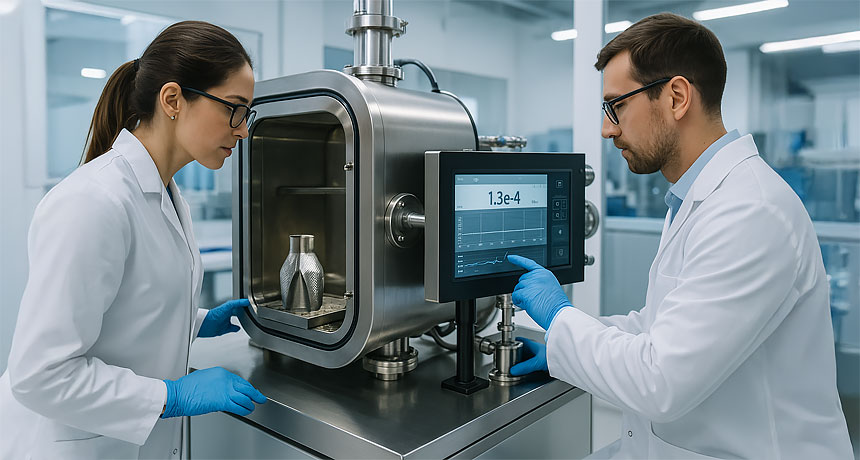
The Importance of Vacuum in Additive Manufacturing (3D Printing)
Additive manufacturing (AM), more widely known as 3D printing, has grown from a rapid-prototyping novelty into a cornerstone of modern industry. From aerospace components and medical implants to electronics and energy systems, 3D printing enables unprecedented design flexibility and material efficiency. But as the field moves beyond plastics into metals, ceramics, and advanced composites, one enabling technology has quietly become essential: vacuum systems.
Vacuum plays a central role in many advanced additive manufacturing methods. By controlling gas environments, reducing contamination, and stabilizing sensitive processes, vacuum ensures that the quality, consistency, and performance of printed parts meet the demands of cutting-edge industries. This article explores why vacuum is indispensable in additive manufacturing, the technologies it supports, and best practices for integrating vacuum systems into 3D printing workflows.
Why Vacuum Matters in Additive Manufacturing
Vacuum systems contribute to 3D printing in several critical ways:
- Contamination control: Residual oxygen, water vapor, and hydrocarbons can cause oxidation, porosity, or weak bonding in metal or ceramic parts. Vacuum reduces these contaminants.
- Process stability: Vacuum provides a controlled atmosphere for high-temperature and laser- or electron-beam-based printing methods, ensuring repeatable results.
- Material performance: Many advanced alloys and composites require oxygen-free conditions to preserve their designed properties.
- Safety and cleanliness: Vacuum handling of powders reduces the risk of dust explosions and minimizes airborne particulates.
Without vacuum, many of the most demanding 3D printing processes simply would not be viable.
Additive Manufacturing Processes that Depend on Vacuum
1. Powder Bed Fusion (PBF)
Techniques such as Selective Laser Melting (SLM) and Electron Beam Melting (EBM) rely on controlled atmospheres; EBM, in particular, requires high vacuum to maintain beam quality. In SLM, a high-power laser fuses fine layers of metal powder (often under low-pressure inert gas). In both cases, vacuum or low-pressure operation prevents oxidation, stabilizes the energy beam, and increases part density.
2. Directed Energy Deposition (DED)
DED feeds powder or wire into a focused energy source (laser or electron beam). For reactive metals like titanium or aluminum, vacuum or low-pressure inert environments minimize oxygen pickup and hydrogen embrittlement, enabling high-strength builds with reduced porosity.
3. Binder Jetting and Sintering
Binder jetting often requires vacuum-assisted debinding and sintering. During debinding, vacuum accelerates removal of solvents and binders. In sintering, vacuum furnaces prevent unwanted reactions at elevated temperatures, helping powders consolidate into dense parts with clean grain boundaries.
4. Polymer and Composite Printing
While many polymer printers operate at atmospheric pressure, advanced composites and high-performance polymers (PEEK, PEKK, ULTEM) benefit from vacuum-assisted heating to reduce voids and enhance inter-layer bonding. Vacuum bagging, borrowed from aerospace composites, is also used to compact laminates and evacuate entrapped gases.
5. Post-Processing (Heat Treatment, HIP, Coating)
Vacuum is essential for post-build processes that improve properties:
- Vacuum heat treatment reduces oxidation and contamination during thermal cycles.
- Hot isostatic pressing (HIP) uses high temperature and pressure under vacuum/inert gas to remove internal porosity and improve fatigue performance.
- Vacuum deposition (PVD/CVD) applies wear, barrier, or functional coatings that tailor surface properties for demanding environments.
Benefits of Vacuum in Additive Manufacturing
- Improved Part Density and Integrity
Lower gas content means fewer voids and pores. Vacuum minimizes entrapped gases and oxidation, increasing tensile strength, ductility, and fatigue life. - Enhanced Surface Finish
Oxygen-free environments reduce spatter oxidation and soot deposition, producing cleaner surfaces and crisper feature edges. - Material Versatility
Vacuum environments enable printing of reactive alloys (Ti, Al, Mg), superalloys (Inconel), refractories, and engineered ceramics that would otherwise oxidize or degrade. - Process Consistency and Repeatability
Stable, low-contamination conditions translate into tighter process windows and more predictable outcomes—critical for aerospace, medical, and energy applications. - Long-Term Reliability
Reduced contamination and porosity increase corrosion resistance and dimensional stability, improving service life of printed parts.
Challenges of Using Vacuum in 3D Printing
- System complexity and cost: Integrating pumps, gauges, valves, and controls adds capital cost and maintenance overhead.
- Pump-down time and throughput: Large-build-volume systems can suffer long cycle times if pump sizing and conductance are not optimized.
- Outgassing from polymers and binders: Volatiles prolong pump-down and can contaminate optics, sensors, and pumps.
- Powder contamination of pumps: Fine particulates can migrate into forelines and damage rotating machinery if not properly trapped.
- Maintenance demands: Deposits, condensables, and powder fines require scheduled cleaning and protective measures.
Despite these challenges, the benefits mean vacuum is indispensable wherever performance matters.
Best Practices for Integrating Vacuum into Additive Manufacturing
Select the Right Pumping Technology
- Dry scroll or diaphragm pumps for roughing/backing—avoid hydrocarbon backstreaming.
- Turbomolecular pumps for clean high vacuum in electron-beam or advanced laser systems.
- Cryopumps or NEG pumps for ultra-clean environments and rapid gas capture in research-grade tools.
Design for Efficient Pump-Down
- Keep chamber volumes as small as practical; use load locks for powder exchange.
- Short, straight forelines with large diameters maximize conductance.
- Add throttle valves and closed-loop pressure control for stable setpoints.
Control Outgassing
- Choose low-outgassing materials for fixtures and internal components.
- Pre-bake fixtures and shields when feasible.
- Use RGA monitoring to track water and hydrocarbon trends; bake or service when levels rise.
Prevent Powder and Condensable Contamination
- Install baffles, mesh screens, and particulate filters before pumps.
- Use cold traps or sorbent traps for condensables from binders and solvents.
- Establish cleaning SOPs for chambers, optics, and gas paths.
Maintain Regular Service Schedules
- Inspect and replace seals and gaskets proactively.
- Track pump health (base pressure, pump-down curves, vibration/current draw).
- Keep spare filters, traps, and common wear items in inventory to minimize downtime.
Future Outlook: Vacuum and Next-Generation 3D Printing
- Larger build volumes will push demand for higher-speed pumping stacks and smarter pressure control.
- New materials—from high-entropy alloys to ceramic matrix composites—will require cleaner, lower-pressure environments.
- Automation and Industry 4.0 will bring IoT-connected pumps, predictive maintenance, and digital twins for entire AM cells.
- Sustainability will favor oil-free, energy-efficient pumps with heat recovery and lower lifecycle emissions.
- Hybrid manufacturing cells will combine AM, vacuum sintering, surface finishing, and coating in one automated line—sharing centralized vacuum infrastructure.
Vacuum is not just a support utility—it’s a core capability shaping the performance envelope of additive manufacturing.
Conclusion
From powder bed fusion and directed energy deposition to debinding, sintering, HIP, and PVD/CVD coatings, vacuum enables the precision and repeatability modern 3D printing demands. It reduces contamination, boosts density, broadens material options, and ensures consistent mechanical performance. While it introduces complexity, a well-designed vacuum architecture pays for itself through higher yields, better part quality, and lower rework.
At High Vac Depot, we live at the intersection of vacuum technology and additive manufacturing. Whether you need pumps, gauges, valves, traps, or guidance on system design and maintenance, our team is ready to help. Contact us today to discuss your application and get tailored recommendations that keep your AM operations clean, reliable, and efficient.



Leave a Reply
You must be logged in to post a comment.