



Etch And Clean High Vacuum Environments And Applications
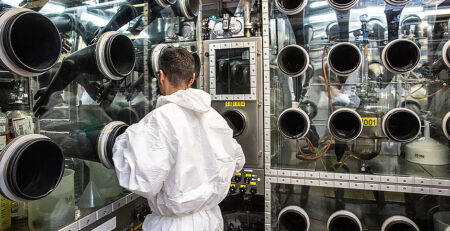
In the realm of industrial and laboratory processes, where precision and control are paramount, the use of vacuum and ultra-high vacuum systems is indispensable. These systems, far removed from their household counterparts, power a wide array of sophisticated applications, from semiconductor manufacturing to advanced materials research. At the heart of these systems lie intricately designed turbomolecular vacuum pumps, engineered to create and maintain the high vacuum environments essential for such processes.
Understanding High Vacuum Environments
Before delving into the intricacies of high vacuum systems, it’s essential to grasp the concept of vacuum itself. In simple terms, a vacuum is a space devoid of matter, where the pressure is significantly lower than atmospheric pressure. High vacuum environments take this concept further by reducing pressure to extremely low levels, often reaching levels as low as 10^-6 Torr or even lower.
The Role of Turbomolecular Vacuum Pumps
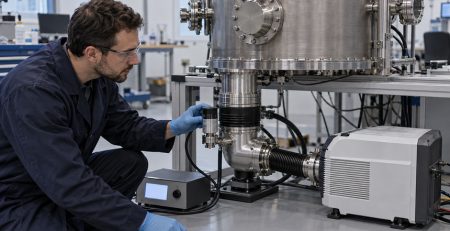
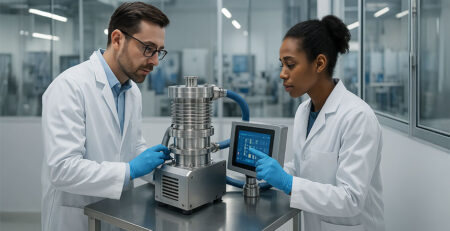
At the core of high vacuum systems are turbomolecular vacuum pumps, sophisticated devices designed to achieve and maintain the ultra-low pressures required for various industrial and scientific processes. These pumps utilize rapidly rotating blades to impart momentum to gas molecules, effectively pushing them out of the vacuum chamber, thus creating a vacuum.
Applications in Semiconductor Manufacturing
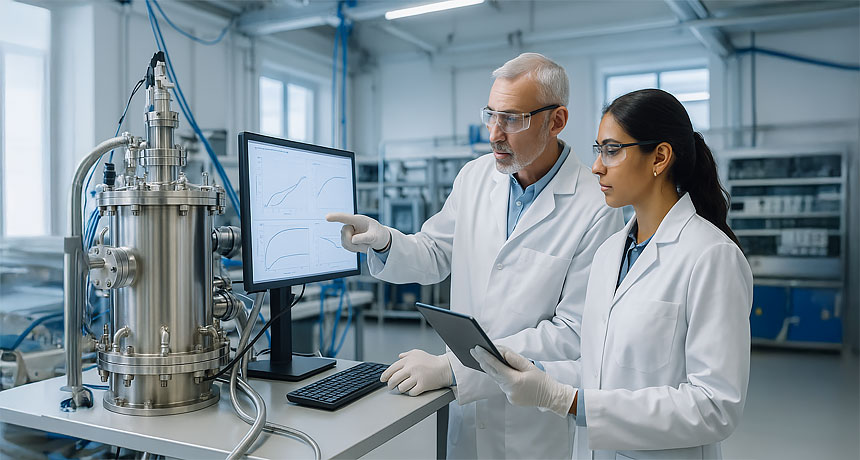
One of the most prominent applications of high vacuum systems is in semiconductor manufacturing. In this industry, even microscopic impurities can severely compromise the performance and reliability of electronic devices. High vacuum environments are thus crucial during processes such as chemical vapor deposition (CVD), physical vapor deposition (PVD), and etching, where precise control over gas composition and pressure is essential for depositing thin films and creating intricate patterns on semiconductor wafers.
Advancements in Materials Science
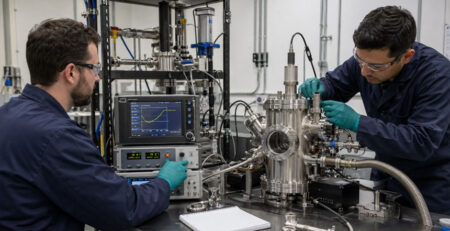
Beyond semiconductor manufacturing, high vacuum environments play a pivotal role in materials science research. From studying the properties of novel materials to synthesizing nanomaterials with unique properties, researchers rely on ultra-high vacuum conditions to eliminate contaminants and unwanted reactions that could alter the material’s characteristics. Techniques like molecular beam epitaxy (MBE) and surface science experiments necessitate the use of high vacuum systems to ensure reproducibility and accuracy in results.
Precision Cleaning in Vacuum Environments
In addition to creating pristine environments for manufacturing and research, high vacuum systems are also employed in precision cleaning applications. Components used in vacuum systems must be free from contaminants that could degrade performance or compromise the integrity of the vacuum. Processes like plasma cleaning and ion bombardment are employed to remove organic and inorganic residues from surfaces, ensuring optimal performance and longevity of vacuum system components.
Conclusion
In the intricate world of industrial and laboratory processes, high vacuum environments are indispensable for achieving precision, reliability, and reproducibility. Turbomolecular vacuum pumps lie at the heart of these systems, enabling the creation and maintenance of ultra-low pressure environments essential for semiconductor manufacturing, materials science research, and precision cleaning applications. As technology continues to advance, the demand for high vacuum solutions tailored to specific applications will only grow. For expert guidance and support in navigating the complexities of high vacuum systems, reach out to the experienced team at High Vac Depot. Whether you’re looking to optimize your existing setup or embark on a new venture, our experts are here to assist you every step of the way.
Feel free to contact us with any questions, inquiries, or consultation needs. Your journey to mastering high vacuum environments starts here.




Leave a Reply
You must be logged in to post a comment.