




25Jul
11Jul
Comparing Ceramic vs Metal Seals for High Vacuum Applications
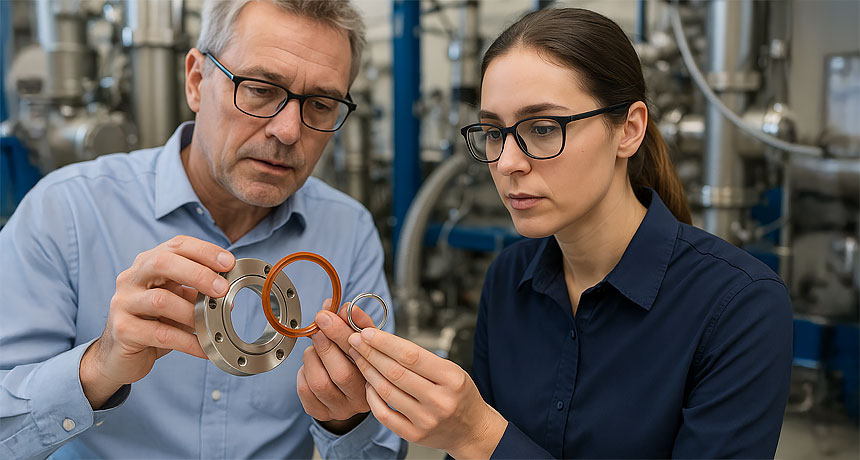
In the demanding world of high vacuum and ultra-high vacuum (UHV) environments, choosing the right sealing material is critical. Whether you’re working in semiconductor fabrication, space simulation, surface analysis, or high-energy physics, the seals in your vacuum system help define the limits of your performance. Two of the most trusted materials for high vacuum sealing are ceramic and metal—each with distinct advantages, limitations, and ideal use cases. In this post, we’ll explore how ceramic and metal seals compare in terms...
27Jun
How to Select the Right Gauge for Measuring Ultra-High Vacuum
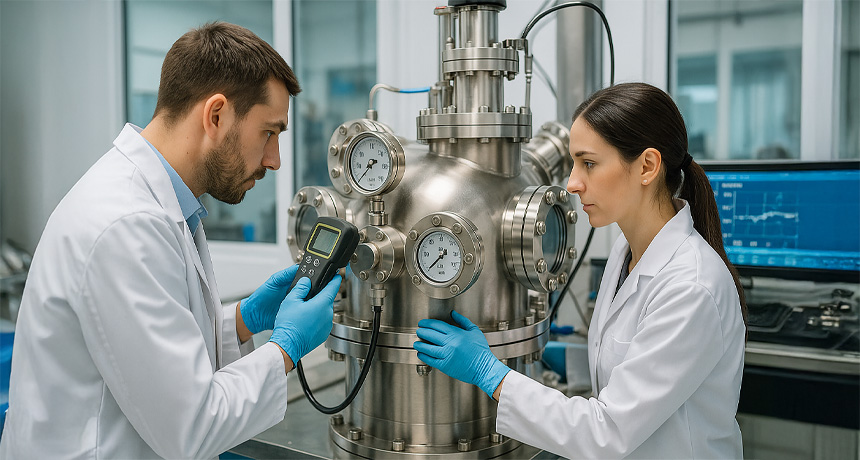
Achieving ultra-high vacuum (UHV)—defined as pressures below 10⁻⁷ mbar (or torr)—is a cornerstone of many advanced technologies, including semiconductor fabrication, surface science, particle physics, and aerospace research. But simply reaching these levels is only half the battle. Measuring them accurately is just as critical—and significantly more challenging. At such extreme vacuums, traditional gauges no longer function reliably. Choosing the right vacuum gauge for UHV conditions requires a clear understanding of gauge technologies, sensitivity ranges, materials, and system compatibility. In this...
13Jun
Using Vacuum Systems in Food Processing and Preservation
Vacuum technology isn’t just for laboratories, industrial manufacturing, or scientific research — it’s also a powerful ally in the food industry. From extending shelf life to improving flavor and texture, vacuum systems are central to many modern food processing and preservation techniques. In this post, we’ll explore why vacuum matters in food applications, examine popular vacuum-based processes, and offer best practices for operators looking to optimize their systems for hygiene, efficiency, and quality.
23May
The Role of Vacuum in Nanotechnology Manufacturing
Nanotechnology, the science of manipulating matter at the atomic or molecular scale, has rapidly transformed a wide range of industries, from electronics and medicine to energy and materials science. As components shrink to the scale of nanometers—one billionth of a meter—precision and cleanliness become paramount. In this ultra-sensitive world, even a single stray molecule can cause defects. That’s where vacuum technology comes in.
09May
Understanding the Relationship Between Vacuum Level and Pumping Speed
In any vacuum system — whether for research, manufacturing, or analytical applications — two critical performance indicators are vacuum level and pumping speed. These parameters are closely linked, and understanding how they interact is key to optimizing your vacuum process. Misunderstandings in this area can lead to poor system design, inefficient pump selection, or misinterpreted performance expectations. This article explores the relationship between vacuum level and pumping speed, explains the physics and engineering behind it, and offers practical guidance for...
26Apr
Best Practices for Installing and Using Vacuum Pressure Transducers
In the world of high and ultra-high vacuum applications, accurate pressure measurement is absolutely critical. Whether you are working in semiconductor fabrication, materials research, pharmaceutical production, or any other high-precision industry, the reliability of your vacuum system often hinges on the performance of your vacuum pressure transducers.
11Apr
When to Use a Helium Leak Detector vs a Mass Spectrometer
In the precise world of vacuum technology, leak detection is critical to ensuring system performance, maintaining safety, and preserving product integrity. Whether you're working with turbomolecular pumps in semiconductor manufacturing or high-vacuum chambers in laboratory research, the smallest leak can lead to significant consequences. Two of the most common methods for leak detection — helium leak detectors and mass spectrometers — each offer unique advantages depending on your application.
28Mar
How to Calibrate a Vacuum Gauge for Accurate Readings
In the realm of industrial and laboratory applications, particularly those involving turbomolecular vacuum pumps, the accuracy of vacuum measurements is paramount. Precise readings ensure optimal performance, maintain safety standards, and uphold the integrity of experimental results. Regular calibration of vacuum gauges is essential to achieve and maintain this accuracy. This comprehensive guide will walk you through the importance of calibration, the methods available, and a step-by-step procedure to calibrate your vacuum gauge effectively.
14Mar

