


Dry Screw Pumps
The range of dry screw pumps is ideal for your low and medium vacuum applications. It can not only be used for industrial applications, but also for coating. HeptaDry is the ideal solution for all areas requiring oil-free vacuum. Pumping speeds in this series range from 100 to 2,500 m3/h.
The one-piece variable-pitch rotors are a special advantage. In the HeptaDry, they provide the necessary internal compression to save energy costs. The innovative design and low speed of the pumps result in low stressing of the bearings and seals.
Our screw pumps from the HeptaDry series are ideal for use as single pumps or in combination with our HiLobe Roots pumps.
Complete series with pumping capacity of 100 to 2,500 m3/h
Optimal ultimate pressure and broadest range of applications
Completely dry and oil-free
High pumping speed at atmospheric pressure reduces the pump-down time
Water cooling with temperature monitoring
Saving energy costs through internal compression
Wear-free dynamic seal
Direct gas flow and optimized temperature profile minimize deposits
Low energy consumption, low noise level
Motor with IE3 efficiency class
Extensive range of accessories
Applications
Metallurgy
Coating
Freeze drying
Load locks
Electron beam welding
Gas separation
Superclean gas applications
Degassing
A dry screw vacuum pump consists of two parallel, non-contacting helical screw-shaped rotors (1) and (2), Fig. 1, rotating synchronously at high speeds via precision gears (3). They rotate in opposite directions, and in so doing, trap a quantity of gas at the inlet (5) and transport it towards the exhaust port (6) and into the exhaust channel (7). The walls of the stator (9) and the special shape of the intermeshing screws form the compression chambers or pockets (4) that transport the gas.
NASH dry screw vacuum pumps are remarkably simple, yet sophisticated, reliable, and highly efficient. The dry and contact-free operation requires no lubrication in the pumping chamber. This translates into major advantages: no process contamination and no pollution caused by the pump operation. NASH dry vacuum pumps can safely and reliably handle corrosives, organics, inorganics, and solvents because of their oil-free, non-contacting screw design. Key applications include:
Distillation (normal, short path & molecular)
Drying (filter, freeze, and transformer drying)
Evaporation
Filtration
House vacuum (central or general/laboratory vacuum service, pilot plants)
Reactor service
Solvent recovery (fuel vapor)
Sterilization (ethylene oxide)
Problem gasses (flammable, low auto-ignition temperatures, corrosive gasses, and hydrogen)
Conveying
Inside dry screw vacuum pumps, two screw rotors rotate in opposite directions. The pumped medium is trapped between the cylinder and the screw chambers.
There, it is compressed, and transported to the outlet. During this process, the screw rotors do not come in contact with each other or the cylinder.
Cooling can be achieved through air or water cooling.
Dry Screw Pumps
Dry vacuum pump technology – especially variable pitch screw chemical dry pumps – offer clear, measurable advantages in a wide variety of essential applications. A properly designed dry screw vacuum pump ensures the processing needs are accomplished with a safe, reliable, and cost-effective solution. Dry screw vacuum pumps require no water or oil for sealing or lubrication in the vacuum stages. Consequently, these dry vacuum systems eliminate effluent generation, pollution, and high treatment costs. The working chamber of the machines is 100% oil-free, making them relatively maintenance free. The integrated speed control enables energy-optimized operation of the devices. Becker drives continuously adjust the volume flow to the demand. It‘s high efficiency results into low energy consumption.
-
Dry Screw Pumps, Pumps, Pumps
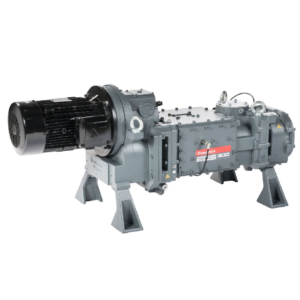
Edwards EDS300 Dry Screw Pump
Starting at: $42,444.00Starting at: $41,170.68Select options This product has multiple variants. The options may be chosen on the product pageQuick View -
Dry Screw Pumps, Pumps, Pumps
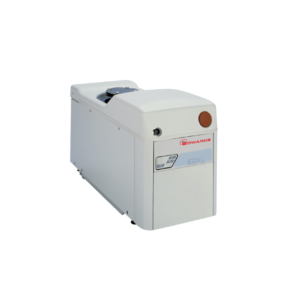
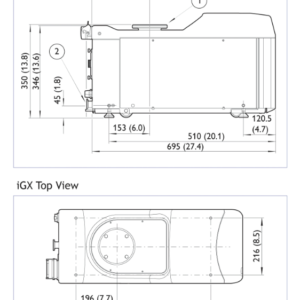
Edwards iGX100N Dry Pump
Original price was: $32,075.00.$22,438.00Current price is: $22,438.00. -
Dry Screw Pumps, Pumps
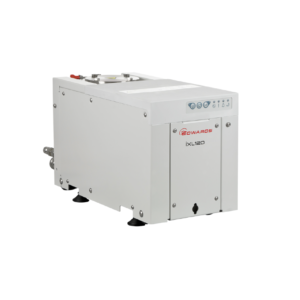
Edwards iXL120N E 200-460V 3/8 QC Water Fittings
Original price was: $27,011.00.$20,088.00Current price is: $20,088.00. -
Dry Screw Pumps, Pumps, Pumps
Leybold VaroDry VD Dry Screw Pumps
Starting at: $13,255.07Starting at: $12,923.69Select options This product has multiple variants. The options may be chosen on the product pageQuick View
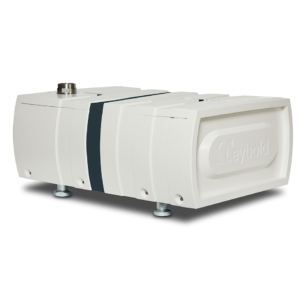
Leybold DRYVAC dry screw vacuum pumps have a robust and proven design with reliable performance and increased uptime for industrial applications. Designed to be energy efficient, the DRYVAC series increases production yield and allows for continuous production in a demanding process with minimal risk of contamination thanks to modern oil-free technology. Compact and easy-to-install, DRYVAC vacuum pumps are equipped with onboard intelligent Frequency Converter for easy monitoring and network connectivity.
Dry screw vacuum pumps are environmentally friendly as there is less oil to dispose of and maintain within their design. These pumps are more efficient than a liquid sealed model and are well suited for industrial and process applications. The KDP’s simple, robust design can handle process by-products – liquids, condensate, and even small particles. The SDV’s space saving C-face motor design eliminates the need for motor coupling and guard, with Niflon coated internals to reduce damage from corrosive or condensate gases.
Becker’s screw vacuum pumps are dry positive displacement pumps designed for rough vacuum. They have two counter-rotating rotors and a housing that encloses the rotors. Thanks to the direct drive via an integrated frequency inverter, a drive gear is no longer required.
The rotors are designed with a regular, thread-shaped profile and mesh with each other like cogwheels. When the rotors rotate, they move out in a machine direction and convey the medium from the suction side (inlet) to the pressure side (outlet). They rotate in opposite directions without touching one another or the housing.
Liquid ring and dry screw vacuum pumps are both pumps that use the principle of positive displacement but have some differences. A liquid ring pump uses fluids to create the needed vacuum, while a dry vacuum pump does not.
The vacuum in dry screw pumps is created through two parallel-arranged screw rotors that rotate in opposite directions. These rotors trap the gas coming in through the inlet and deliver it to the gas discharge or pressure side. As the gas is getting compressed, there is no contact between the rotors. This does away with any need for the compression chamber to have any operating fluids or lubrication, and this is the reason for the nomenclature “dry” technology.
There is, however, an internal gearbox in dry screw pumps that does need to be lubricated. This lubricant can find its way into the pumping chamber during operations over time, and in a way making false the claim of a “dry” technology.
Liquid ring pumps have cylindrical housing that is filled partially with a sealing liquid and a shaft that has a multi-blade impeller that is placed eccentrically inside the housing. The centrifugal force created by the rotating impeller creates a liquid ring.
It is this force that causes the liquid ring to be forced up against the walls on the inside of the pumping chamber.
Because of the eccentric location of the impeller in the pumping chamber, there is a constant increase and decrease of its blades depth of entry. This helps to create an increase in impeller cell volume on the side of the inlet port, thus forming a vacuum. What happens on the discharge side, is that the blades move further into the ring of liquid, causing an increase in pressure that causes the discharge through the discharge port.
The design inherent in the liquid ring pump permits the use of various liquids to act as a sealant, and this can be oil, solvents, water, or any other liquids that are compatible with the process. Liquids remain in contact with the vapors or gases that are needed to be compressed, and as a result, the compression of the gas is almost isothermal. Depending on the conditions, discharge temperatures can be between 45 and 150 degrees Fahrenheit and remain typically controlled in any process applications. As discharge temperatures are controlled in liquid ring pumps, gases of all kinds can be passed through or condensed, and this offers a great degree of flexibility.
Screw vacuum pumps can have a constant-pitch design, that allows transportation of gas at a constant volume of discharge where the major part of the compression occurs or can have progressive pitch design, in which the vapor or gas gets compressed while it is being transported to the discharge port. In both cases, the compression is adiabatic, and no heat leaves or enters the process, and discharge temperatures can be as high as 450 degrees Fahrenheit. These high temperatures in the use of this technology lead to concerns for safety.