


Turbo Pumps
Turbopumps are available in the pumping speed range from 10 to over 3,000 liters per second.
These features mean that turbomolecular pumps are suitable for a wide range of applications from electron microscopy to semiconductor processing.
These vacuum pumps may be operated at any installation location.
The compact rotor design is unmatched in its class, and combines the highest possible throughput with the smallest possible dimensions.
This translates to a correspondingly high kinetic rotor energy which, if the rotor and stator were to touch, would transfer within a fraction of a second to the housing and the pump’s anchor system too.
The turbomolecular pump is optimized for molecular flow conditions and requires a suitably sized backing pump to exhaust to atmosphere.
This allows a vacuum of up to 10-11 mbar to be generated in the high and ultra-high vacuum range.
The working parts are not dissimilar to a multi-bladed turbine, with blades along the whole length of the shaft.
A turbomolecular pump is a multistage axial-flow turbine in which high speed rotating blades provide compression by increasing the probability of gas moving in the pumping direction.
These pumps will win you over with their high cost-efficiency and flexibility.
In a few minutes, your chamber is in the high vacuum range.
Vacuum technology is essential for making many high-tech products used in everyday life.
In a turbomolecular pump, a rapidly spinning fan rotor ’hits’ gas molecules from the inlet of the pump towards the exhaust in order to create or maintain a vacuum.
The stability of the outer casing of the pump is thus of vital importance and is tested both theoretically and experimentally.
Turbomolecular pumps (TMPs) are kinetic vacuum pumps which operate using a very fast spinning rotor (usually rotating at between 24,000 and 90,000 RPM).
A turbomolecular pump is a type of vacuum pump, superficially similar to a turbopump, used to obtain and maintain high vacuum.
Modern turbopumps attain peripheral speeds of over 400 meters per second.
Turbomolecular pumps are extremely easy to operate and have low maintenance requirements.
The high pumping speed of Turbo vacuum pumps is not compromised by high loads or unintentional gas break-ins.
Turbo Pumps
There are various types of mechanical pumping systems that achieve high vacuums and provide years of reliability. However, to create extremely high vacuums in extreme temperature conditions, such as required in high energy physics, plasma or nanotech applications, a turbomolecular pump (or high vacuum pump) may be necessary. These types of high vacuum pumps achieve rotational speeds of up to 80,000 rpms, with total pressures lower than 1×10^-10 mbar and compression ratios of 1×10^11. Turbomolecular pumps are designed to be oil and contaminant-free, for over 250,000 operational hours. High vacuum pumps can be designed with specific uses in mind. For example, a turbomolecular pump designed for thin film deposition will be optimized for moving argon gas, which is typically used in this instance.
-
Pumps, Pumps, Turbo Pumps
Ebara EBT70 Turbo Pump
Starting at: $4,212.00Starting at: $3,790.80Select options This product has multiple variants. The options may be chosen on the product pageQuick View -
Pumps, Turbo Packages, Turbo Pumps
Ebara EBT70 Turbo Pump Package
Starting at: $4,500.00Starting at: $3,995.00Select options This product has multiple variants. The options may be chosen on the product pageQuick View -
Parts
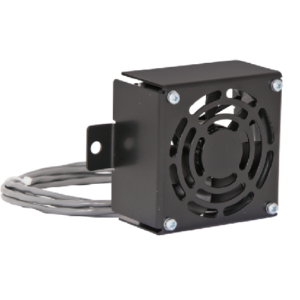
Edwards ACX25 Air Cooling Fan for nEXT Turbos
Original price was: $535.00.$518.95Current price is: $518.95. -
Pumps, Pumps, Turbo Pumps
Edwards nEXT 240 Turbo Pump
Starting at: $14,999.00Starting at: $11,249.25Select options This product has multiple variants. The options may be chosen on the product pageQuick View -
Parts
Edwards nEXT 240/300/400 Air Coolers
$612.00$593.64Select options This product has multiple variants. The options may be chosen on the product pageQuick View -
Pumps, Pumps, Turbo Pumps
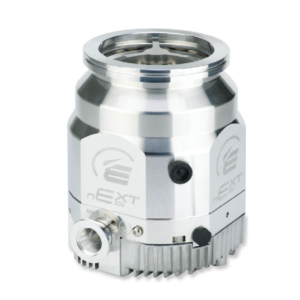
Edwards nEXT 300 Turbo Pump
Starting at: $15,412.00Starting at: $11,559.00Select options This product has multiple variants. The options may be chosen on the product pageQuick View -
Pumps, Pumps, Turbo Pumps
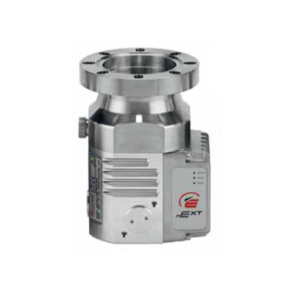
Edwards nEXT 85 Turbo Pump
Starting at: $7,351.00Starting at: $6,762.92Select options This product has multiple variants. The options may be chosen on the product pageQuick View -
Parts, Rebuild Kits
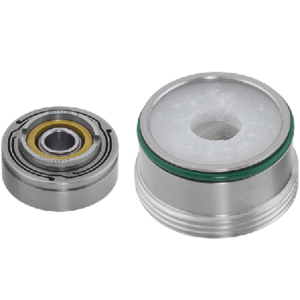
Edwards nEXT Turbo 240/300/400 Bearing and Oil Cartridge
Starting at: $433.00Starting at: $420.01Select options This product has multiple variants. The options may be chosen on the product pageQuick View -
Parts, Rebuild Kits
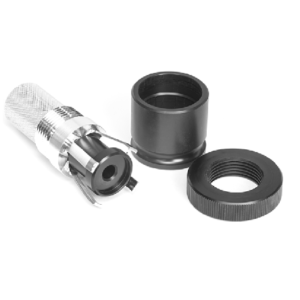
Edwards nEXT Turbo 240/300/400 Tool Kits
Starting at: $483.00Starting at: $468.51Select options This product has multiple variants. The options may be chosen on the product pageQuick View -
Parts
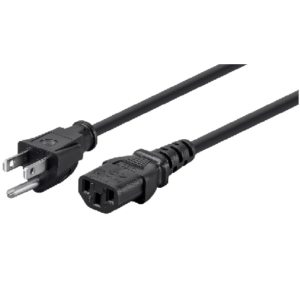
Edwards nEXT Turbo Power Cable
Starting at: $33.00Starting at: $32.01Select options This product has multiple variants. The options may be chosen on the product pageQuick View -
Parts
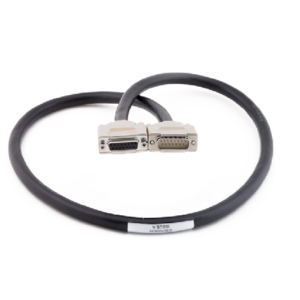
Edwards nEXT Turbo Pump to Controller Cable
Starting at: $498.00Starting at: $483.06Select options This product has multiple variants. The options may be chosen on the product pageQuick View -
Admittance, Parts, Specialty Valves, Vacuum Valves
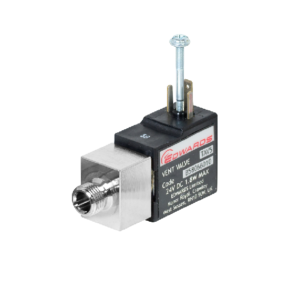
Edwards TAV5 Vent Valve
Starting at: $739.00Starting at: $716.83Select options This product has multiple variants. The options may be chosen on the product pageQuick View


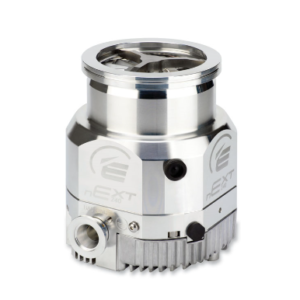

High-speed rotors with up to 90,000 rpm generate the pressure conditions required for application.
Turbopumps with their optimized reliability use proven bearing systems which are available in two different options – a hybrid bearing system with a combination of a ceramic ball bearing on the fore-vacuum side and a permanently magnetic radial bearing on the high vacuum side, and a fully, active magnetic bearing system in which the rotor is levitated with no contact or wear at all.
Such conditions are essential for the generation of the highest cleanliness condition.
Turbopumps have established themselves globally as the technological standard, having acquired their name from their turbine cousins.
These pumps work on the principle that gas molecules can be given momentum in a desired direction by repeated collision with a moving solid surface.
Turbomolecular pumps are highly compact and when combined with a dry primary pump, do not backstream oil into the vacuum system.
Turbomolecular pumps are found in every semiconductor fab, the vast majority of helium leak detectors and research laboratories.
Turbomolecular vacuum pumps work on the principle that gas molecules, when struck by a solid surface, will move in a specific or deliberately biased direction.
They provide a low vibration, hydrocarbon-free operation which requires no regeneration.
In this case the solid surface is a turbine-type blade rotating within a chamber.
The innovative design of the ceramic bearing is completely free of oil and other possible contaminants.
Numerous applications in research and industry, in fact, need a vacuum with an extremely low absolute pressure (high vacuum).
They provide constant pumping speeds of up to 4,000 l/s in the High, Ultra-high and Extreme High Vacuum ranges.
Their typical operating pressures are in the high to ultra-high pressure range between 10-3 and 10-11 mbar, employing pumping speeds of between 10 and 4,000 l/s.
Yet most never give them much thought, one simply roughs out the vacuum chamber and spin them up.